IOC Responds to Putin's Congratulations: A Controversial Moment in Olympic Politics
2025-03-21
Author: Wei Ling
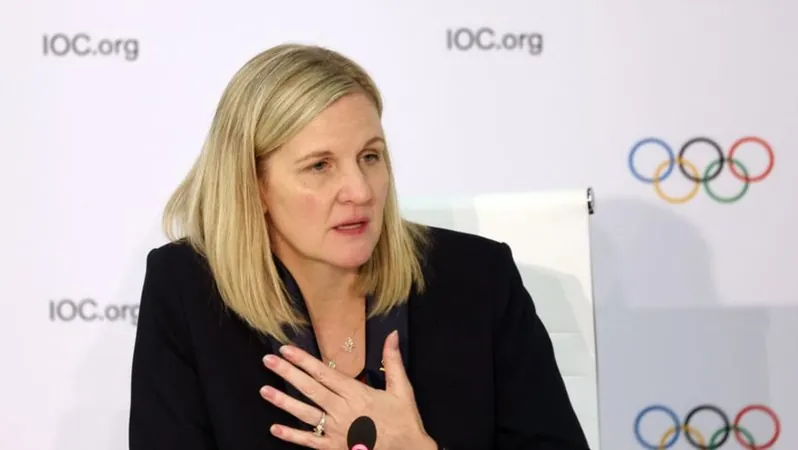
In an unexpected turn of events, the International Olympic Committee (IOC) found itself in the spotlight after Russian President Vladimir Putin sent a congratulatory message to newly-elected IOC President Kirsty Coventry. This development was met with silence from the IOC, which stated that it was not their place to comment on such gestures.
Coventry, elected president on Thursday, received warm wishes from Putin, who highlighted her "unique experience" and expressed confidence that she would further the progress of the Olympic movement. This congratulatory message comes at a tumultuous time for the IOC, as Russia's Olympic Committee was suspended in 2023 following Russia's controversial invasion of Ukraine.
It's worth noting that Putin’s outreach is not unprecedented. He was also among the first world leaders to congratulate Coventry's predecessor, Thomas Bach, shortly after his election in 2013, just before the high-profile Sochi Winter Olympics. The Sochi Games marked a monumental expenditure for the country, costing approximately $51 billion, making it the most expensive Olympics in history at that time.
IOC President Thomas Bach addressed the situation during a press conference, stating, “On congratulations, you cannot choose who congratulates you and when,” acknowledging the complexities surrounding diplomatic gestures in the sports arena.
Amidst the backdrop of these events, Russia is keen to have its athletes reinstated in the Olympic Games, following the IOC's ban that stemmed from electoral processes held in occupied Ukrainian territories. During the past year's Paris Games, only a limited number of athletes from Russia and Belarus were allowed to compete as neutrals, highlighting the ongoing tensions surrounding Russian sports participation.
Additionally, Belarusian President Alexander Lukashenko also extended his congratulations to Coventry, further complicating the geopolitical narrative surrounding the Olympics.
With the new leadership of Kirsty Coventry at the helm, the IOC is now faced with navigating these intricate political waters, as the world watches closely to see how this might influence future Olympic policies and international relations within the sport.
 Brasil (PT)
 Canada (EN)
 Chile (ES)
 Česko (CS)
 대한민국 (KO)
 España (ES)
 France (FR)
 Hong Kong (EN)
 Italia (IT)
 日本 (JA)
 Magyarország (HU)
 Norge (NO)
 Polska (PL)
 Schweiz (DE)
 Singapore (EN)
 Sverige (SV)
 Suomi (FI)
 Türkiye (TR)
 الإمارات العربية المتحدة (AR)