Meet the Oldest Ant Ever Found: A 113-Million-Year-Old Predator from Brazil!
2025-04-25
Author: Mei
Unlocking the Secrets of the Past
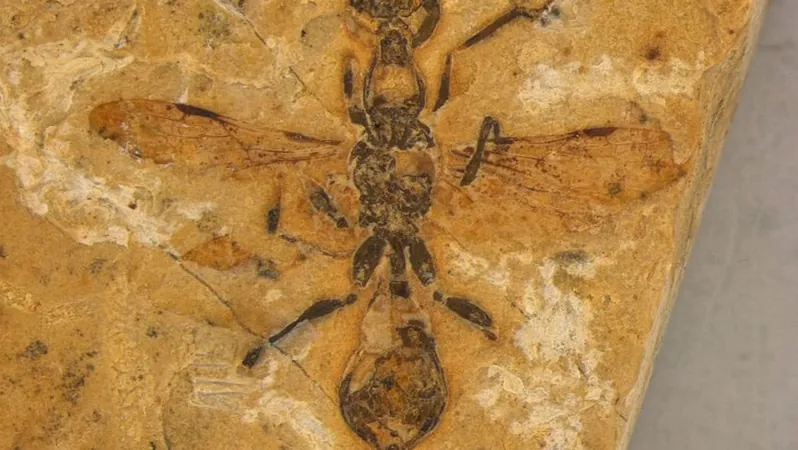
In a groundbreaking discovery, scientists have unveiled the fossilized remains of the oldest-known ant, a winged predator boasting scythe-like jaws that roamed the Earth 113 million years ago during the age of dinosaurs. This remarkable specimen, known as Vulcanidris cratensis, was found in limestone excavated in northeastern Brazil.
Hell Ants: The Terror of the Cretaceous Period
Vulcanidris cratensis belongs to a lineage dubbed "hell ants," recognized for their ominous jaw structure. While these creatures thrived across vast regions during the Cretaceous Period, none of their descendants survive today. Interestingly, a previously identified hell ant was named Haidomyrmex, after Hades, the Ancient Greek god of the underworld.
A Close Encounter with Nature's Predator
This strikingly medium-sized ant, measuring about half an inch (1.35 cm), was equipped with specialized jaws perfect for pinning or impaling its prey. Fascinatingly, like some ants we see today, Vulcanidris had wings and was likely an adept flyer. It also sported a well-defined stinger reminiscent of a wasp!
From Fossil to Fascination: A Scientist's Surprise
Entomologist Anderson Lepeco, from the Museum of Zoology at the University of São Paulo, was combing through fossils when he stumbled upon this incredible specimen. "I was shocked to recognize this as a close relative of a previously described hell ant from Burmese amber," he remarked.
Decoding Ant Evolution
Vulcanidris cratensis turns out to be about 13 million years older than other known ancient ants found in amber across France and Myanmar. The quality of its preservation in limestone, unearthed in the Crato geological formation, adds to its significance. Clarity in the fossil shows that these ancient ants had jaw movements distinctive from today's species, elevating our understanding of ant evolution.
A Rich Ecosystem of the Ancient World
This ant thrived in a bustling ecosystem among an array of creatures, including spiders, millipedes, crustaceans, turtles, flying reptiles known as pterosaurs, and feathered dinosaurs like Ubirajara. Its predators could have been frogs, birds, spiders, or larger insects!
The Ants’ Global Dominance Today
Fast forward to today, and ants are ubiquitous, with an estimated global population of 20 quadrillion, far surpassing the human population of about 8 billion! Lepeco states, "They are one of the most abundant groups in most environments on Earth," illustrating their crucial roles in our ecosystems, from predation to maintaining soil health.
A Glimpse into the Past and Future
The discovery of Vulcanidris cratensis not only showcases a fascinating snapshot of Earth's deep history but also raises profound questions about the beginnings of ants as a group. Ants, having evolved from wasp-like ancestors, may have originated between 168 and 120 million years ago, as molecular estimates suggest.
Conclusion: The Legacy of Ants Throughout Time
This incredible find at northeastern Brazil enriches the story of evolution and biodiversity, reminding us of the tightly woven relationships within ecosystems both ancient and modern. Ants are not just survivors; they're integral players in the web of life that sustains our planet.

 Brasil (PT)
 Canada (EN)
 Chile (ES)
 Česko (CS)
 대한민국 (KO)
 España (ES)
 France (FR)
 Hong Kong (EN)
 Italia (IT)
 日本 (JA)
 Magyarország (HU)
 Norge (NO)
 Polska (PL)
 Schweiz (DE)
 Singapore (EN)
 Sverige (SV)
 Suomi (FI)
 Türkiye (TR)
 الإمارات العربية المتحدة (AR)