Mice: The Battle of Territorial Guardians vs. Roaming Casanovas
2025-04-25
Author: Mei
Revealing the Secrets of Male Mice Behavior
In a groundbreaking study at the Max Planck Institute for Evolutionary Biology, scientists unearthed astonishing insights into the romantic lives of male house mice — those familiar critters you might find scurrying around barns or basements. By observing 244 wild-derived male mice over an astonishing 11 months within specially designed enclosures, researchers captured a vivid picture of their mating strategies.
Two Distinct Paths: Guardians vs. Roamers
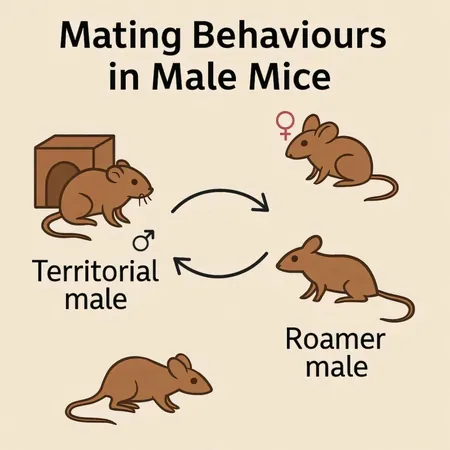
The study, led by Fragkiskos Darmis along with colleagues Anja Guenther and Alexandros Vezyrakis, revealed a striking contrast in behavior among the mice. While some males fiercely defend their nesting territories, safeguarding females and their offspring, others opt for a more adventurous route, seeking fleeting encounters. But here’s the kicker — their choices are not hardwired; they adapt based on their circumstances, showcasing an intriguing flexibility aligned with their unique personalities.
Adaptability: The Key to Survival
This isn’t mere instinct at play. Instead, it’s a strategic adaptation, proving that when it comes to mating, males are not bound by genetics but instead are shaped by their experiences, rivals, and environments. When territorial dominance proves unachievable, these enterprising males resort to roaming as a clever alternative.
The Pros and Cons of Each Strategy
So, who comes out on top? Territorial males may stand a better chance of frequent reproduction, but it’s not without its risks. Defending a nest is fraught with stress and the possibility of injury, which can take a toll on their well-being. Meanwhile, roaming males might not reproduce as often, yet they have a unique advantage by carrying larger testes, suggesting a greater investment in sperm production to maximize chances during those brief romantic escapades.
Diverse Paths to Success
The researchers’ findings illuminate how these differing mating strategies are influenced by a combination of personality traits, physical condition, and social dynamics. The implications are profound: these behaviors not only dictate reproductive success but also chart varied life trajectories — some mice lead longer, safer lives, while others embrace high risks for quick rewards.
A Dynamic Dance of Evolution
This research shines a light on the remarkable adaptability and versatility of male house mice. As their environments shift, so too do their strategies, offering a captivating glimpse into the evolutionary dance of life. Not only do these insights deepen our understanding of animal behavior, but they also paint a broader picture of how species can flex and adapt to survive in a changing world.
 Brasil (PT)
 Canada (EN)
 Chile (ES)
 Česko (CS)
 대한민국 (KO)
 España (ES)
 France (FR)
 Hong Kong (EN)
 Italia (IT)
 日本 (JA)
 Magyarország (HU)
 Norge (NO)
 Polska (PL)
 Schweiz (DE)
 Singapore (EN)
 Sverige (SV)
 Suomi (FI)
 Türkiye (TR)
 الإمارات العربية المتحدة (AR)