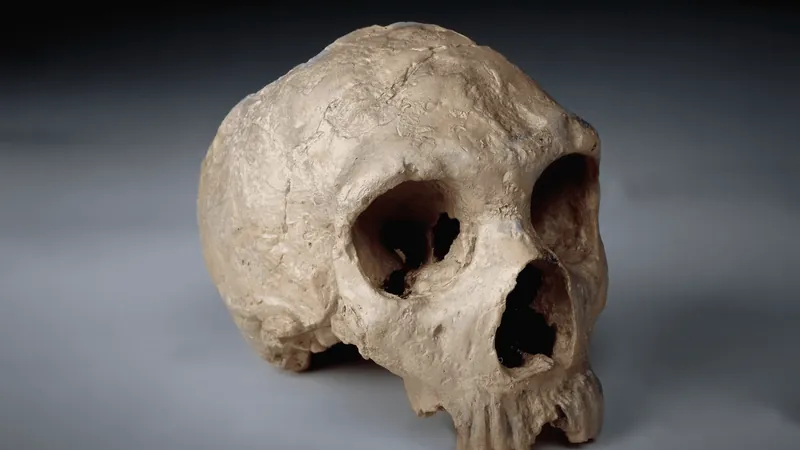
Neanderthal Discovery in France: The Shocking Truth Behind Their Extinction
2025-04-21
Author: Ming
Unveiling the Secrets of Neanderthal Extinction
Exciting new findings from France provide fresh insights into the mysterious extinction of Neanderthals approximately 40,000 years ago. A groundbreaking study from the Globe Institute at the University of Copenhagen has confirmed a compelling theory regarding their demise and opens up a window into their social behaviors.
Remarkable Discovery in a French Cave
Deep within a cave in southern France, researchers unearthed the remains of a male Neanderthal, illuminating the social structures of these ancient inhabitants. This significant discovery not only reinforces existing theories about Neanderthal extinction but also sheds light on their unique social dynamics.
The Dark Side of Inbreeding
An analysis of the Neanderthal genome revealed alarming evidence of inbreeding. These ancient people lived in small, isolated groups for generations, resulting in dangerously low genetic diversity. This lack of variety likely compounded genetic issues over time, accelerating their decline.
Social Structures: A Comparative Analysis
The findings suggest that Neanderthals had a starkly different social structure compared to early modern humans. While early humans often forged intergroup connections, enhancing survival through genetic diversity, Neanderthals remained cut off, likely imperiling their adaptability.
Communication: Key to Survival
Unlike their Neanderthal counterparts, early modern humans demonstrated remarkable communication skills and knowledge exchange across various groups. This ability played a crucial role in developing innovative survival strategies and mating networks, whereas Neanderthals' isolation stunted their evolutionary progress.
The Importance of Mating Networks
Evidence indicates that early humans, particularly those in Siberia, formed mating networks to counteract inbreeding, promoting healthy genetic variations. Such adaptive strategies provided a robust advantage for survival, a stark contrast to the Neanderthals' plight.
Decoding Neanderthal DNA
The recent analysis of the DNA from the newly discovered Neanderthal in France is momentous—it's only the fifth Neanderthal genome found in Western Europe! This genetic data is pivotal in reconstructing the historical narrative of Neanderthal populations.
Insights from Other Neanderthal Remains
Further comparisons with another Neanderthal genome in France revealed ancestry from a distinct lineage, emphasizing the existence of isolated communities. This reaffirms the theory of genetic isolation among Neanderthals, despite the presence of surrounding groups.
Patterns of Isolation in the Altai Mountains
Similar patterns of inbreeding and isolation have been documented in Neanderthals from the Altai Mountains, a region marked by natural barriers that foster genetic seclusion. The new French findings extend this understanding to Western European Neanderthals, reinforcing the isolation hypothesis.
Why This Discovery Matters
The discovery adds crucial evidence to the theory that social isolation played a significant role in Neanderthal extinction. While this concept has been floated for years, the genomic data from France bolsters the argument. However, researchers stress that further genetic insights are essential.
Looking Ahead: Future Research Focus
Scientists are eager to gather more genomic data to enrich our understanding of Neanderthal history. This latest discovery is just the beginning; many questions about their lives and extinction remain unanswered.
Implications for Human Evolution
The findings offer significant implications for understanding human evolution itself. By comparing Neanderthals and early modern humans, researchers can glean insights into the survival factors that shaped our species, notably the differences in social organization and behavior.
Valuable Neanderthal DNA Across Eurasia
While numerous Neanderthal remains have been identified, extracting DNA from these specimens remains scarce. The oldest known Neanderthal DNA, dating back 120,000 years, has been retrieved from areas like the Altai Mountains and Belgium. Thus, this new genome is an invaluable contribution to a limited repository of Neanderthal genetic material!
Conclusion: The Battle of Survival
The Neanderthal remains discovered in France bolster the theory that social isolation and inbreeding were pivotal factors in their extinction. While early humans thrived through connections and shared knowledge, Neanderthals' secluded existence likely sealed their fate. This crucial difference in social behavior could explain why one species flourished while the other vanished.

 Brasil (PT)
 Canada (EN)
 Chile (ES)
 Česko (CS)
 대한민국 (KO)
 España (ES)
 France (FR)
 Hong Kong (EN)
 Italia (IT)
 日本 (JA)
 Magyarország (HU)
 Norge (NO)
 Polska (PL)
 Schweiz (DE)
 Singapore (EN)
 Sverige (SV)
 Suomi (FI)
 Türkiye (TR)
 الإمارات العربية المتحدة (AR)