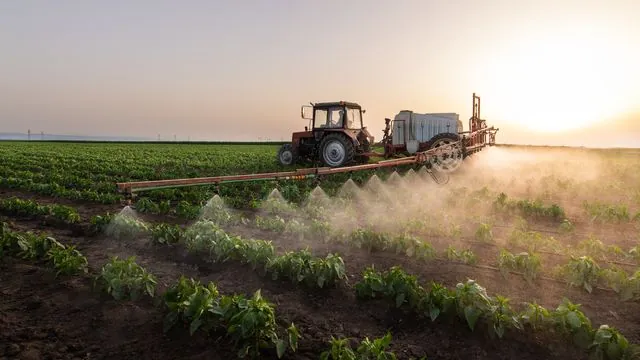
New Study Reveals Hidden Dangers of Herbicide Ingredients in Drinking Water
2025-04-16
Author: Yu
The Hidden Threat in Your Water?
Recent research is shaking up what we know about the safety of our drinking water. Traditionally, inactive ingredients in herbicides and other everyday products have been dismissed as irrelevant contaminants. However, a groundbreaking study from the McKelvey School of Engineering at Washington University in St. Louis is challenging that notion.
Unveiling the Risks of Inactive Ingredients
Lead researcher Jean Brownell, a graduate student under associate professor Kimberly Parker, has focused on amines used in herbicides. These inactive ingredients, meant to stabilize herbicides and enhance their effectiveness, could actually play a significant role in producing harmful byproducts during the water treatment process.
Nitrosamines: A Hidden Health Hazard
Brownell’s investigation revealed that inactive amines might be just as problematic, if not more so, than the herbicides themselves in generating nitrosamines—dangerous compounds that can emerge during water disinfection. This could elevate health risks for communities, especially in regions with rising herbicide usage.
A Call to Reevaluate Herbicide Impact
"Everyone deserves access to clean water and healthy food," said Brownell. "We must critically examine how agricultural chemicals may influence our water supply downstream." As farming practices evolve, so should our understanding of their implications.
Ame-Increase: More than Meets the Eye
Brownell's analysis shows a concerning trend: the use of amines in herbicides has surged in recent decades, particularly in the Midwest. This increase brings their contribution to nitrosamine precursors into question, positioning them on par with those from pharmaceutical sources.
Changing the Narrative on Agricultural Chemicals
Traditionally, nitrosamine precursors were believed to mainly come from consumer products like pharmaceuticals and dyes. Parker emphasizes the need to update this narrative as agricultural practices shift. She insists, "We must rethink our assumptions about the agricultural impact on water quality and adapt our studies accordingly."
Get Ready for More Research!
Brownell and Parker contend that this startling revelation demands further investigation, particularly focused on localized studies that reflect seasonal variations. They also stress the necessity for better data collection from farmers to ensure safe practices for our water and food systems.
 Brasil (PT)
 Canada (EN)
 Chile (ES)
 Česko (CS)
 대한민국 (KO)
 España (ES)
 France (FR)
 Hong Kong (EN)
 Italia (IT)
 日本 (JA)
 Magyarország (HU)
 Norge (NO)
 Polska (PL)
 Schweiz (DE)
 Singapore (EN)
 Sverige (SV)
 Suomi (FI)
 Türkiye (TR)
 الإمارات العربية المتحدة (AR)