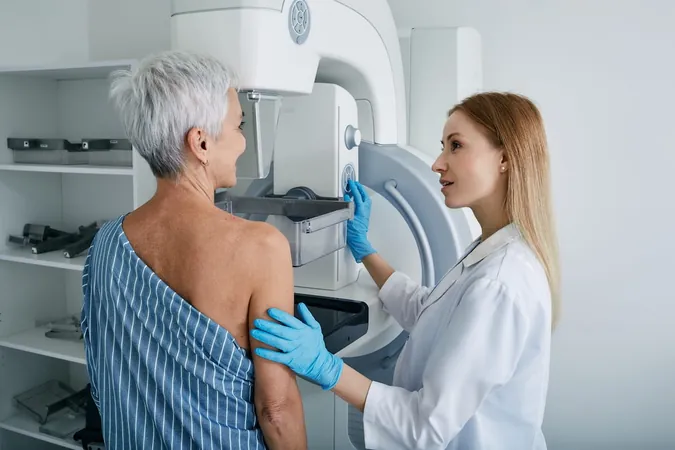
New Study Reveals Mammograms Dramatically Lower Late-Stage Breast Cancer Risk in Seniors
2025-04-17
Author: John Tan
Groundbreaking Findings on Breast Cancer Screening
A recent investigation has unveiled that regular mammography screenings for older women significantly slash the chances of being diagnosed with advanced-stage breast cancer. The study published in JAMA Network Open highlights the crucial impact of timely screenings in reducing breast cancer-specific mortality rates.
The Study's Scope and Key Insights
Researchers delved into the Surveillance, Epidemiology, and End Results (SEER)-Medicare database, analyzing 13,028 women diagnosed with breast cancer through mammography. They discovered that more than 77% of these women had undergone at least one mammogram in the five years leading up to their diagnosis, with a majority in their 70s. Alarmingly, over 29% were diagnosed with later-stage disease.
Profound Impacts of Regular Screenings
The study found that having at least one mammogram in that five-year window decreased the risk of later-stage diagnosis by an astonishing 54%. Furthermore, these women experienced a 36% lower risk of dying from breast cancer. The researchers noted that those who had three or four screenings enjoyed an additional 37% decrease in breast cancer-specific mortality compared to those with just one.
Access to Care is Key
Lead author Sida Huang emphasizes that access to primary care is crucial. Women eligible for both Medicare and Medicaid had a staggering 52% lower rate of previous mammography screenings, indicating significant disparities in preventative care access. The data suggests that engagement with primary care increases the likelihood of timely mammograms.
Top Takeaways from the Research
1. **Routine Mammography Matters**: Women screened at least once in five years face a 54% reduced risk of later-stage breast cancer.
2. **Frequency is Beneficial**: More frequent screenings correlate with lower mortality rates, with those having three to four screenings seeing a 37% reduction.
3. **Socioeconomic Factors Affect Screening Rates**: Engagement with primary healthcare services dramatically improves screening rates, particularly for lower-income women.
Critical Considerations and Limitations
While the findings are promising, the study did acknowledge limitations, such as potential misclassification of mammograms as screening or diagnostic due to the claims-based nature of the data. Furthermore, due to lack of information on breast density and family history, the researchers couldn't evaluate the impact of these factors on cancer severity at diagnosis.
In a time where preventive care is more vital than ever, these findings shed light on the life-saving importance of regular mammograms for senior women and highlight a pressing need to improve access to these essential screenings.
 Brasil (PT)
 Canada (EN)
 Chile (ES)
 Česko (CS)
 대한민국 (KO)
 España (ES)
 France (FR)
 Hong Kong (EN)
 Italia (IT)
 日本 (JA)
 Magyarország (HU)
 Norge (NO)
 Polska (PL)
 Schweiz (DE)
 Singapore (EN)
 Sverige (SV)
 Suomi (FI)
 Türkiye (TR)
 الإمارات العربية المتحدة (AR)