New Study Reveals Shocking Link Between Hormonal Contraceptives and Postpartum Depression in New Moms
2025-04-24
Author: Jia
Hormonal Contraceptives: A Double-Edged Sword?
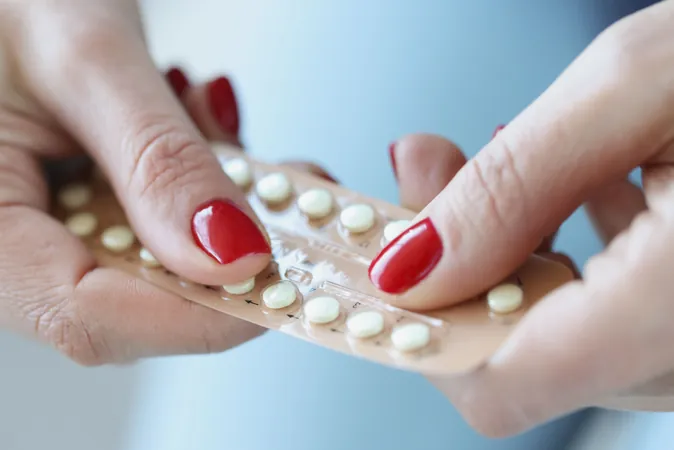
A groundbreaking study, recently published in JAMA Network Open, uncovers a troubling association between hormonal contraceptive (HC) initiation in first-time mothers and an increased risk of postpartum depression. This alarming trend has been identified across various forms of hormonal birth control, including combined oral contraceptives (COCs), nonoral methods (CNOCs), and progestogen-only nonoral contraceptives (PNOCs), though results regarding progestogen-only pills (POPs) remain inconclusive.
A Global Epidemic: Understanding the Use of Hormonal Contraceptives
According to the World Health Organization, approximately 248 million women globally use hormonal contraceptives. While the effectiveness of these methods in preventing unintended pregnancies is well-known, concerns about safety are increasingly significant among healthcare professionals. Side effects can vary widely, influenced by individual medical histories.
Health Risks: The Hidden Dangers of Hormonal Birth Control
Previous research has raised red flags about hormonal contraceptives, linking them to severe health issues like ischemic stroke and myocardial infarction, particularly among women using modern estrogen-progestin methods. Furthermore, women with BRCA1 gene mutations face an elevated breast cancer risk when using these contraceptives. Yet, the connection between hormonal birth control and postpartum depression had remained largely unexplored—until now.
Study Breakdown: Unveiling the Risks of Postpartum Hormonal Contraceptive Initiation
Drawing from the extensive Danish national health registers, researchers examined the link between hormonal contraceptive use postpartum and depression risks in a diverse group of primiparous women. The study analyzed 610,038 new mothers who gave birth between January 1997 and December 2022, excluding those with previous conditions related to depression or certain birth complications.
The Numbers Speak: Increased Risk of Depression Postpartum
Among the participants, about 40.7% began using hormonal contraceptives within 12 months of giving birth. The findings were striking: those who initiated hormonal birth control faced a 49% higher adjusted hazard ratio (AHR) for developing postpartum depression—an increase from a 1.36% to 1.54% absolute risk over 12 months. Particularly, the risks soared with COCs and CNOCs, showing AHRs of 1.72 and 1.97, respectively. In contrast, while POPs initially showed a lower risk, this reversed later postpartum.
The Takeaway: Raising Awareness Among Healthcare Providers
Interestingly, the study found no age-related trends affecting the risk of depression associated with HC use. The authors stress the need for heightened awareness regarding the implications of hormonal contraceptive initiation during the postpartum period. Healthcare providers must be equipped with this critical knowledge to inform and guide new mothers on their contraceptive choices.
A Call to Action: Prioritize Mental Health in Birth Control Conversations
As we uncover the intricate links between hormonal contraceptives and mental health, this study underscores a vital conversation that must be had. With postpartum depression being a significant concern for new mothers, understanding the potential risks tied to birth control choices is essential for safeguarding women's health.
 Brasil (PT)
 Canada (EN)
 Chile (ES)
 Česko (CS)
 대한민국 (KO)
 España (ES)
 France (FR)
 Hong Kong (EN)
 Italia (IT)
 日本 (JA)
 Magyarország (HU)
 Norge (NO)
 Polska (PL)
 Schweiz (DE)
 Singapore (EN)
 Sverige (SV)
 Suomi (FI)
 Türkiye (TR)
 الإمارات العربية المتحدة (AR)