Pakistan Issues Strong Warning to India: 'Any Threat Will Be Met with Firm Response'
2025-04-24
Author: Nur
In a dramatic escalation of tensions between Pakistan and India, the Pakistani government has vowed to respond firmly to any perceived threats from its neighbor. This declaration follows India's recent accusations alleging Pakistan's support of "cross-border terrorism" after a horrific attack on Indian tourists.
On Thursday, April 24, Prime Minister Shehbaz Sharif convened an urgent meeting of the National Security Committee (NSC) in Islamabad, which included top military officials, such as the influential Chief of Army Staff, Asim Munir. The meeting was called in direct response to rapid escalations from India's side.
Following the devastating attack in Indian-administered Kashmir that killed 26 individuals, New Delhi took decisive steps, including suspending a crucial water-sharing treaty, shuttering the main land border crossing between the two nations, downgrading diplomatic relations, and retrieving visas for Pakistani nationals.
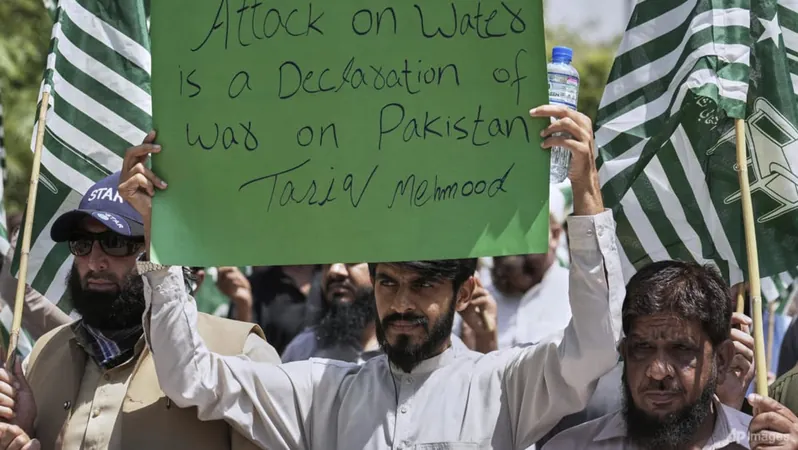
In retaliation, Pakistan swiftly announced a series of extensive measures, expelling Indian diplomats and canceling visas for all Indian visitors, except those of Sikh heritage. The government also issued a stark warning that any move by India to disrupt water supplies from the Indus River would be considered an "act of war." Pakistan promised to react forcefully across all realms of national power if such provocations occurred.
Adding to the tension, Pakistan declared Indian military advisers as "persona non grata," ordering them to leave the country immediately. Additionally, it imposed a closure of its airspace to all Indian-owned and operated airlines and shut down the key Wagah border crossing, effectively suspending all cross-border movements with India.
This fierce standoff highlights the precarious relationship between the two nuclear-armed neighbors, where even minor incidents can escalate into significant confrontations. As both nations brace for the potential fallout, the international community watches closely, concerned about the implications for regional stability.
 Brasil (PT)
 Canada (EN)
 Chile (ES)
 Česko (CS)
 대한민국 (KO)
 España (ES)
 France (FR)
 Hong Kong (EN)
 Italia (IT)
 日本 (JA)
 Magyarország (HU)
 Norge (NO)
 Polska (PL)
 Schweiz (DE)
 Singapore (EN)
 Sverige (SV)
 Suomi (FI)
 Türkiye (TR)
 الإمارات العربية المتحدة (AR)