R-Loops: The Double-Edged Sword for Genome Stability and Disease
2025-04-20
Author: Siti
Unlocking the Mysteries of R-Loops
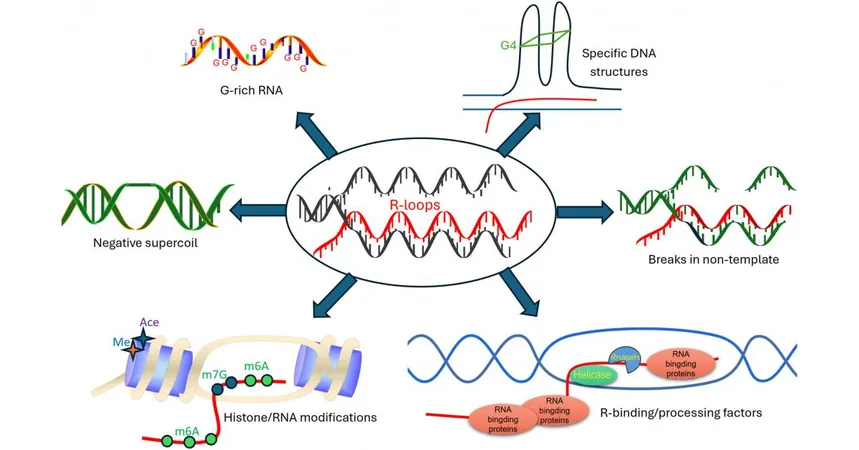
A groundbreaking review has shed light on R-loops, fascinating three-stranded structures composed of RNA:DNA hybrids and displaced DNA strands. These biomolecules have emerged from the shadows of mere transcription artifacts to become critical players in maintaining genomic stability—or jeopardizing it.
The Evolution of R-Loop Research
Advancements in research techniques have revolutionized our understanding of R-loops. From primitive antibody imaging to sophisticated sequencing methods like DRIP-seq and R-ChIP, scientists have unveiled the widespread presence of R-loops at vital genomic hotspots including promoters, terminators, and regions notable for double-strand breaks (DSBs). This revelation paints R-loops as key players in the DNA damage response.
The Paradox of R-Loops
This review highlights R-loops' dual nature. When functioning under optimal conditions, they serve protective roles: regulating gene expression, terminating transcription, and aiding repair through homologous recombination. Yet, when imbalances occur, R-loops can wreak havoc—blocking replication forks, causing transcription-replication conflicts, and triggering DSBs that jeopardize genome integrity. This risk is particularly pronounced with mutations in DNA repair genes like BRCA1 and BRCA2, linking R-loops to cancers and neurodegenerative diseases.
The RNA Connection
The review also delves into the significant influence of non-coding RNAs, such as lncRNAs, circRNAs, and enhancer RNAs, on R-loop formation. These RNA species can either stabilize or disrupt R-loops, ultimately affecting chromatin structure and gene expression dynamics. Additionally, interactions between R-loops and RNA modifications such as m6A and m5C complicate their biological roles, especially within the context of DNA repair.
R-Loops and Immune Responses
A fascinating aspect of this research is the emerging link between R-loops and immune responses. They can activate pathways like cGAS-STING, connecting genomic health with inflammatory signaling. This transformative significance positions R-loops as a tantalizing target for therapeutic interventions, particularly in diseases fueled by genome instability.
Conclusion: The Future of R-Loop Research
As R-loops continue to unveil their complex roles in genomic integrity and disease, they stand at the forefront of molecular biology research. Their dual nature not only captivates scientists but also sparks hope for innovations in treatment strategies for a range of illnesses.

 Brasil (PT)
 Canada (EN)
 Chile (ES)
 Česko (CS)
 대한민국 (KO)
 España (ES)
 France (FR)
 Hong Kong (EN)
 Italia (IT)
 日本 (JA)
 Magyarország (HU)
 Norge (NO)
 Polska (PL)
 Schweiz (DE)
 Singapore (EN)
 Sverige (SV)
 Suomi (FI)
 Türkiye (TR)
 الإمارات العربية المتحدة (AR)