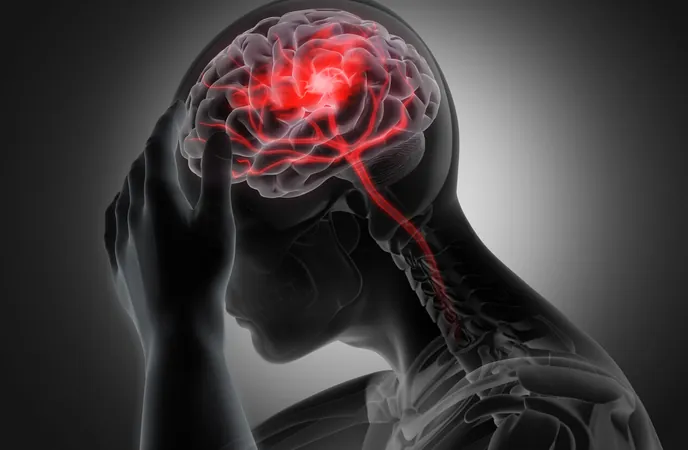
Revealing the Hidden Dangers: Unexplained Strokes on the Rise in Younger Adults
2025-04-20
Author: Wei
A Shocking Surge in Strokes Among the Under-50s
Strokes are increasingly striking adults under 50, yet many cases remain a mystery, occurring without the typical culprits like high blood pressure. New groundbreaking research suggests that one potential hidden cause may lie within the heart itself—a condition known as patent foramen ovale (PFO).
The Role of Nontraditional Risk Factors
This study reveals that individuals with a PFO experience cryptogenic strokes driven by nontraditional risk factors such as chronic kidney disease, cancer, and venous blood clots. Remarkably, the most significant nontraditional risk factor identified was migraine with aura, particularly in women and those with a PFO. While a PFO is often deemed harmless, its link to higher stroke risk cannot be ignored.
Insight from Experts
Lead researcher Dr. Jukka Putaala expressed surprise at the prominence of nontraditional factors, especially migraines, in young adults suffering strokes. He emphasized the need for healthcare professionals to revisit risk assessments, particularly for young women, to include inquiries about migraine histories and other atypical risk factors.
Women at Greater Risk
The findings also indicate that women who have suffered strokes exhibit higher occurrences of pregnancy-related complications, such as gestational diabetes and preeclampsia, compared to those without stroke histories. This highlights the necessity to tailor prevention strategies that address unique risks faced by women.
The Data Behind the Findings
Utilizing data from the SECRETO study, researchers analyzed 523 adults aged 18-49 who experienced cryptogenic ischemic strokes, comparing them to a control group of the same age without stroke histories. Their examination focused on a composite of 12 traditional and 10 nontraditional risk factors, as well as five specific to women.
Increasing Awareness for Effective Prevention
Notably, the analysis revealed that each additional nontraditional risk factor more than doubled the likelihood of stroke in PFO patients. For those without PFOs, the rate jumped by 70%. It's essential to note that while these insights are enlightening, they do not establish a direct cause-and-effect relationship.
Shifting Strategies in Stroke Prevention
Dr. Tracy E. Madsen, an expert in emergency medicine, highlighted how the risk of stroke fluctuates between genders and ages. Recognizing specific risks related to women can significantly shift approaches to screening and education. Dr. Putaala reiterated that nearly half of ischemic strokes in younger adults are cryptogenic, underlining the critical importance of comprehensive risk factor assessments.
Conclusion: A Call for Awareness and Action
With the alarmingly rising numbers of strokes among the young, it's clear: we must pay closer attention to both traditional and emerging risk factors. As we increase awareness and implement tailored strategies, we can better protect younger populations from unexplained strokes.
 Brasil (PT)
 Canada (EN)
 Chile (ES)
 Česko (CS)
 대한민국 (KO)
 España (ES)
 France (FR)
 Hong Kong (EN)
 Italia (IT)
 日本 (JA)
 Magyarország (HU)
 Norge (NO)
 Polska (PL)
 Schweiz (DE)
 Singapore (EN)
 Sverige (SV)
 Suomi (FI)
 Türkiye (TR)
 الإمارات العربية المتحدة (AR)