Revolutionary Antibiotic Offers Hope for Lyme Disease without Harming Gut Health
2025-04-25
Author: Nur
A Growing Concern: Lyme Disease Cases on the Rise
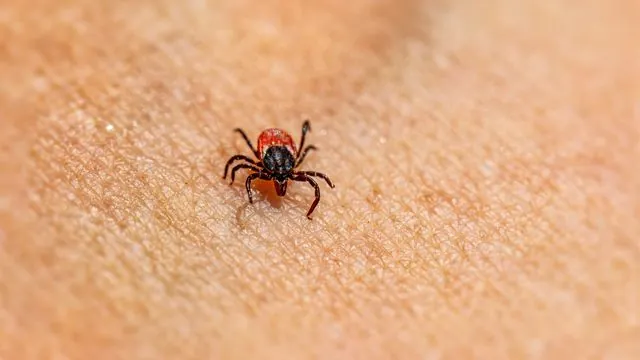
Lyme disease, transmitted through deer ticks that feast on infected animals and then bite humans, strikes nearly half a million people annually in the U.S. This debilitating illness can lead to severe chronic symptoms, including heart issues, neurological problems, and arthritis. However, timely treatment with antibiotics can prevent these long-term health consequences.
Game-Changer: Piperacillin Shows Promise in Treating Lyme Disease
New research from Northwestern University has unveiled that piperacillin, an antibiotic related to penicillin, effectively eradicates Lyme disease in mice at a dosage 100 times lower than the standard treatment, doxycycline. Remarkably, at this minimal dose, piperacillin demonstrated virtually no negative impact on beneficial gut bacteria, in contrast to doxycycline and other antibiotics that can devastate the microbiome.
The Drawbacks of Current Treatments
Doxycycline, widely used to treat Lyme, destroys beneficial gut flora, leading to unpleasant side effects. Alarmingly, it proves ineffective for 10-20% of patients and isn't safe for young children—the population most susceptible to tick bites. As climate change prolongs tick seasons, the need for refined treatment options has become more pressing.
A Bright Future for Lyme Disease Treatment
Brandon L. Jutras, the lead researcher, emphasizes a shift towards personalized medicine for Lyme disease. Understanding various Borrelia strains opens avenues for tailored treatments, maximizing effectiveness while minimizing adverse effects. Jutras’s lab recently garnered recognition in a prestigious Lyme diagnostics competition, underscoring the importance of innovative research in tackling this disease.
Piperacillin: A Potential Preventive Measure?
Piperacillin, already FDA-approved for pneumonia, might soon be considered for preemptive treatment in individuals exposed to Lyme—like those with known deer tick bites—through a single-dose administration.
How the Research was Conducted
The research team meticulously screened over 500 medications, utilizing a sophisticated molecular framework to assess antibiotic interactions with Borrelia bacteria. Their findings revealed that piperacillin targets a unique cell wall synthesis mechanism specific to Lyme bacteria, disrupting their growth and leading to their demise.
A Complex Battle against Bacteria
Piperacillin has historically been administered with another drug to combat severe infections. However, Jutras identified that adding this combination doesn't enhance its efficacy against Lyme bacteria, which lack mechanisms that neutralize piperacillin. This specialization not only makes piperacillin an effective treatment but also safeguards gut health.
A Call for Innovative Solutions
With no approved vaccine for Lyme disease, Jutras’s future research endeavors aim to establish proactive approaches for diagnosis and treatment. As Lyme disease continues to pose a threat, breakthroughs like piperacillin could transform how we combat this growing public health issue.
 Brasil (PT)
 Canada (EN)
 Chile (ES)
 Česko (CS)
 대한민국 (KO)
 España (ES)
 France (FR)
 Hong Kong (EN)
 Italia (IT)
 日本 (JA)
 Magyarország (HU)
 Norge (NO)
 Polska (PL)
 Schweiz (DE)
 Singapore (EN)
 Sverige (SV)
 Suomi (FI)
 Türkiye (TR)
 الإمارات العربية المتحدة (AR)