Revolutionary Approach to Cholera Control: Could Antibiotics Change the Game?
2025-04-30
Author: Daniel
Cholera: A Growing Threat to Global Health
Cholera has claimed thousands of lives and continues to infect countless individuals each year, with recent spikes in cases ringing alarm bells for governments worldwide. The urgent question arises: How can we effectively manage these outbreaks?
Rethinking Antibiotic Use
Traditionally, public health guidelines have advised against the widespread use of antibiotics for treating cholera, restricting them mainly to severe cases. This cautious approach aims to prevent the disease from developing resistance to existing treatments.
However, groundbreaking research from the University of Utah Health is challenging this conventional wisdom. The study suggests that, under certain conditions, a broader use of antibiotics could actually help curb cholera outbreaks and may even reduce the risk of antibiotic resistance.
The Science Behind the Findings
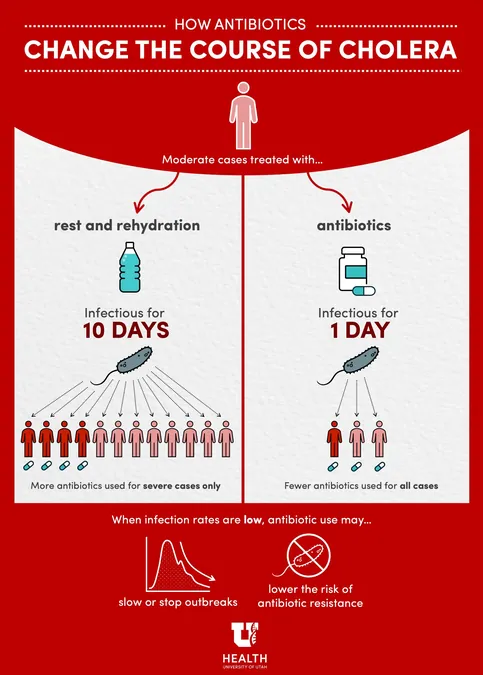
The research sheds light on an intriguing fact: antibiotics significantly decrease the infectious period of cholera patients. While mild to moderate cases typically improve with rest and rehydration, antibiotics can drastically shorten the time a person spreads the infection.
"If you recover naturally, you may feel better in a couple of days but continue to spread cholera for up to two weeks," explains Dr. Sharia Ahmed, co-first author of the study. "In contrast, antibiotics help you feel better within a day and significantly reduce environmental contamination."
A New Strategy Against Outbreaks
This research indicates that treating even moderate cholera cases with antibiotics can effectively slow or even halt outbreaks. Surprisingly, even with more people receiving antibiotic treatments, the overall usage could decrease as fewer individuals fall ill.
This potential reduction in antibiotic use is crucial, considering the escalating issue of antibiotic resistance—particularly concerning with cholera, which has a notorious ability to evade treatment.
Mapping the Path Forward
The researchers employed mathematical modeling to explore various conditions under which increased antibiotic use could be beneficial. They discovered that in densely populated areas or regions lacking clean water, using antibiotics for moderate cases might not significantly slow transmission.
Conversely, in areas where cholera spreads slowly, the research shows that proactive antibiotic treatment for milder cases could limit outbreaks, ultimately resulting in fewer infections and a lower overall antibiotic burden.
An Urgent Global Call to Action
As cholera cases soar—up by a staggering third last year—primarily due to natural disasters and mass displacements, the urgency to revise management strategies has never been more critical. The changing climate is likely to foster conditions for cholera outbreaks, even in regions historically free from the disease.
The researchers caution that their findings necessitate further exploration before prompting changes in public health policy. Additional studies must consider more complex simulations that incorporate the role of vaccines and create guidelines to swiftly determine when aggressive antibiotic use could be warranted.
In Dr. Lindsay Keegan's words, "This research represents a crucial first step in rethinking antibiotic use as a viable strategy for cholera outbreak control." The road ahead may hold the key to combating a disease that has eluded total control for centuries.

 Brasil (PT)
 Canada (EN)
 Chile (ES)
 Česko (CS)
 대한민국 (KO)
 España (ES)
 France (FR)
 Hong Kong (EN)
 Italia (IT)
 日本 (JA)
 Magyarország (HU)
 Norge (NO)
 Polska (PL)
 Schweiz (DE)
 Singapore (EN)
 Sverige (SV)
 Suomi (FI)
 Türkiye (TR)
 الإمارات العربية المتحدة (AR)