Revolutionary Blood Test Could Predict Pregnancy Complications Before They Happen!
2025-04-21
Author: John Tan
Can a Blood Test Change the Game for Expecting Mothers?
Pregnancy can be a rollercoaster, especially when serious complications like preeclampsia and gestational diabetes could be lurking around the corner. Imagine if we could detect these issues before symptoms even appear—scientists might just have cracked the code!
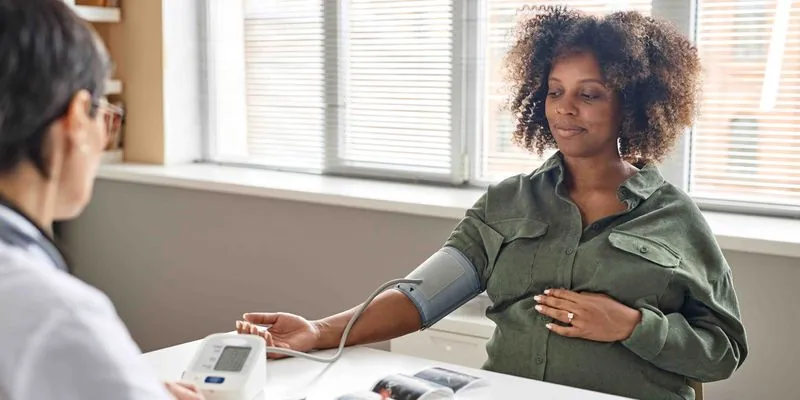
Currently, many pregnant women only learn about conditions like high blood pressure or excessive thirst during their routine check-ups, often too late to prevent them. Surendra Sharma, a specialist at the University of Texas Medical Branch, warns, "By then, the damage has already been done." Both mother and child can pay the price long after delivery.
Meet the Innovative Research Team!
A cutting-edge team led by Carlos Palma at the University of Queensland is on a mission to intervene before complications arise. Their breakthrough? A revolutionary screening tool that focuses on tiny particles called placental extracellular vesicles (EVs). These microscopic messengers could provide crucial insight into the health status of pregnant women.
Plenty remains to be discovered about how EVs relate to health, but researchers have noticed that changes in their quantity and composition can signal distress in the placenta.
Tracking Down the Right Biomarkers!
To develop their highly anticipated tool, Palma's team analyzed blood plasma samples from 201 women at 13 weeks of pregnancy—half experiencing normal pregnancies and half facing complications like preeclampsia and gestational diabetes.
By isolating EVs and measuring proteins linked to pregnancy health, the researchers trained an algorithm to differentiate between healthy pregnancies and those at risk. They discovered that two biomarkers, placental alkaline phosphatase (PLAP) and cluster of differentiation 9 (CD9), were most effective in predicting complications.
How This Innovative Sensor Works!
Palma's team developed a unique sensor to isolate EVs with these biomarkers. They crafted tiny magnetic beads that detect EVs through a color change reaction—turning a colorless dye blue, indicating the presence of those crucial placental EVs.
By mixing these beads with blood plasma and using magnets to gather the EVs, the team could gauge the risk of complications simply by observing the depth of the blue color.
Experts Weigh In!
Biochemist Andy Powell from Liverpool John Moores University praised the simplicity and potential of the technology, likening it to a home pregnancy test—but for blood!
However, some experts like Sharma express caution, noting that relying on the quantity of EVs may not be the most specific or stable approach for diagnosing pregnancy complications. He advocates for the pursuit of disease-specific biomarkers to ensure accurate predictions.
The Road Ahead!
While this groundbreaking research marks an exciting starting point, experts agree that further investigation and refinement are crucial. As the technology develops, it could transform prenatal care, allowing doctors to identify and address pregnancy complications well before they endanger mother or child. The future of pregnancy health may be right around the corner!

 Brasil (PT)
 Canada (EN)
 Chile (ES)
 Česko (CS)
 대한민국 (KO)
 España (ES)
 France (FR)
 Hong Kong (EN)
 Italia (IT)
 日本 (JA)
 Magyarország (HU)
 Norge (NO)
 Polska (PL)
 Schweiz (DE)
 Singapore (EN)
 Sverige (SV)
 Suomi (FI)
 Türkiye (TR)
 الإمارات العربية المتحدة (AR)