Revolutionary Enzymes to Target Single-Stranded DNA Unearthed!
2025-04-16
Author: Mei
Game-Changer in Genetic Research!
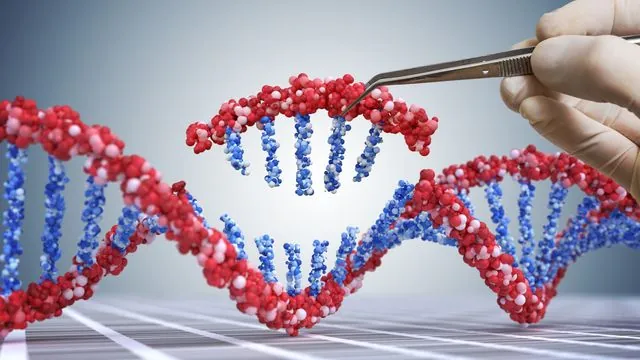
In a groundbreaking discovery, scientists at the Institut national de la recherche scientifique (INRS) have unveiled a new family of enzymes that can induce precise cuts in single-stranded DNA, and it's stirring up excitement in the scientific community.
Following the monumental introduction of CRISPR technology, which transformed the ability to edit double-stranded DNA, this innovation presents a whole new frontier. It opens doors to targeted gene modifications across various organisms—plants, animals, and humans alike!
What Makes Single-Stranded DNA Special?
While double-stranded DNA dominates, single-stranded DNA plays vital roles that cannot be ignored. Found predominantly in certain viruses, this form of DNA is crucial in biological processes like cell replication and repair. Furthermore, its applications span from DNA sequencing to molecular diagnostics and even cutting-edge nanotechnology.
Despite its importance, scientists have faced challenges due to the lack of enzymes that exclusively cut single-stranded DNA. Until now!
The Discovery of Ssn Enzymes!
Under the leadership of Professor Frédéric Veyrier, the INRS team identified the Ssn family of endonucleases—enzymes that cut DNA at specific sequences within single-stranded structures. Their groundbreaking findings have been published in the prestigious journal Nature Communications.
Focusing on one enzyme from the bacterium Neisseria meningitidis (known as meningococcus), the researchers uncovered its crucial role in genetic material exchange—a key driver of bacterial evolution. Professor Veyrier explained that the enzyme recognizes a specific sequence prevalent in its genome, significantly impacting how this bacterium adapts.
Thousands of Similar Enzymes!
Remarkably, the INRS scientists didn't just stop at one enzyme—they found thousands of similar enzymes that can recognize and cut their own unique single-stranded DNA sequences. Postdoctoral researcher Alex Rivera-Millot noted, "Thousands of enzymes possess this ability, each with its own specificity, opening up avenues we have yet to explore!"
A Boon for Health and Biotechnology!
The implications of this discovery are game-changing. With these new tools for DNA detection and manipulation, researchers can develop more effective gene editing methods, enhancing diagnostics and pathogen detection. This innovation represents a significant leap forward in both medical and industrial applications, promising to tackle numerous health challenges.
As patents are being filed, the scientific community stands on the brink of a revolutionary shift in how we approach genetics. This discovery is not just a triumph in research; it heralds potential solutions for some of the most pressing health issues of our time.
 Brasil (PT)
 Canada (EN)
 Chile (ES)
 Česko (CS)
 대한민국 (KO)
 España (ES)
 France (FR)
 Hong Kong (EN)
 Italia (IT)
 日本 (JA)
 Magyarország (HU)
 Norge (NO)
 Polska (PL)
 Schweiz (DE)
 Singapore (EN)
 Sverige (SV)
 Suomi (FI)
 Türkiye (TR)
 الإمارات العربية المتحدة (AR)