Revolutionary Fiber Optics Spy on Ice Quakes Beneath Swiss Glacier
2025-04-21
Author: Yu
Unveiling the Secrets of Glacier Dynamics
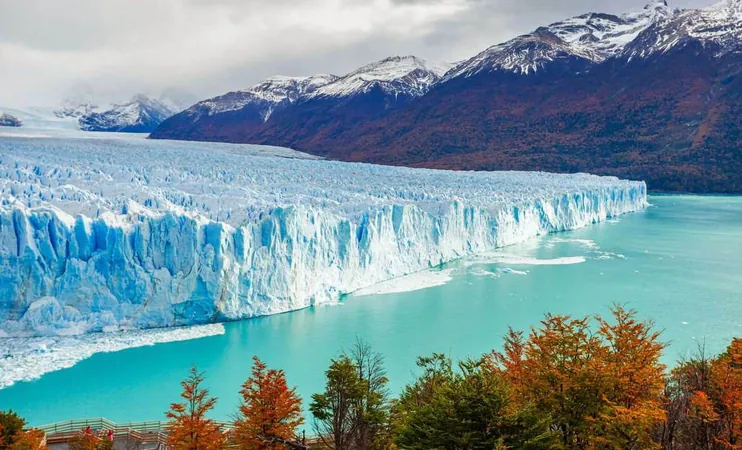
In a stunning breakthrough revealed at the Seismological Society of America’s 2025 Annual Meeting, scientists have harnessed fiber-optic technology to peer into the heart of glaciers, detecting seismic activities like never before. This pioneering research on the Gornergletscher, Switzerland's second-largest glacier, opens new avenues for understanding the intricacies of glacier behavior, climate change, and advanced monitoring techniques.
A Game-Changer in Seismic Research
Researchers from ETH Zürich, spearheaded by Tom Hudson and Andreas Fichtner, deployed a dense grid of fiber-optic cables across a crevasse field on the Gornergletscher. Their mission was clear: to identify and analyze the seismic signals generated by icequakes, which are caused by the formation of crevasses.
Icequakes, unlike traditional tectonic quakes caused by shifting plates, occur through directional fractures in glaciers. Fiber optics, normally used in telecommunications, emerged as an unexpected yet powerful tool to capture these elusive seismic events.
Unlocking Glacier Stability Insights
These crevasses do more than compromise the glacier's surface; they also serve as channels for meltwater, which can accelerate the glacier's movement—a critical factor in understanding glacial melt and its contribution to rising sea levels.
While conventional seismic instruments often falter in these dynamic landscapes, the new fiber-optic setup thrived. Installed just before the seasonal shift from autumn to winter, the insulated cables absorbed sunlight and integrated seamlessly into the ice, enabling unprecedented detection of low-frequency signals that often escape traditional sensors.
Data Explosion: Transformative Implications for Science
The innovative fiber-optic grid generated an astonishing 20 times more data than traditional seismic arrays, significantly enhancing the spatial and temporal detail of seismic monitoring.
With this rich dataset, researchers visualized the full wavefield—the comprehensive behavior of seismic waves within the glacier's subsurface. The team discovered that some oscillations in seismic waveforms indicate resonance effects between fractures, reshaping previous assumptions about water interactions.
Pioneering New Frontiers Beyond Glaciers
What started as a glacier study could have far-reaching impacts on geophysical monitoring. The ETH Zürich team sees potential for applying this fiber-optic approach to various environments, including carbon capture sites, geothermal systems, and even volcanic regions.
Given that glacier ice has a well-defined seismic signature, it provides an ideal environment for testing. If successful, this method could be adapted for more complex geological landscapes, enhancing our understanding of earth science.
Mapping Glacier Damage in 3D
Looking to the future, Hudson aspires to utilize fiber optics to create a three-dimensional seismic map of the glacier's interior. This ambitious goal aims to quantify fracture density and extent, offering a detailed profile of glacial health and stability.

 Brasil (PT)
 Canada (EN)
 Chile (ES)
 Česko (CS)
 대한민국 (KO)
 España (ES)
 France (FR)
 Hong Kong (EN)
 Italia (IT)
 日本 (JA)
 Magyarország (HU)
 Norge (NO)
 Polska (PL)
 Schweiz (DE)
 Singapore (EN)
 Sverige (SV)
 Suomi (FI)
 Türkiye (TR)
 الإمارات العربية المتحدة (AR)