Revolutionary Nanoparticle Treatment Boosts Survival Against Aggressive Brain Cancer
2025-04-23
Author: Li
Hope on the Horizon for Glioblastoma Patients
Glioblastoma multiforme (GBM) is one of the most ruthless brain cancers, afflicting around 30,000 Americans each year. With a grim five-year survival rate of just 7%, traditional treatments like surgery, radiation, and chemotherapy often fall short.
Game-Changing Nanodiscs Target Cancer Cells
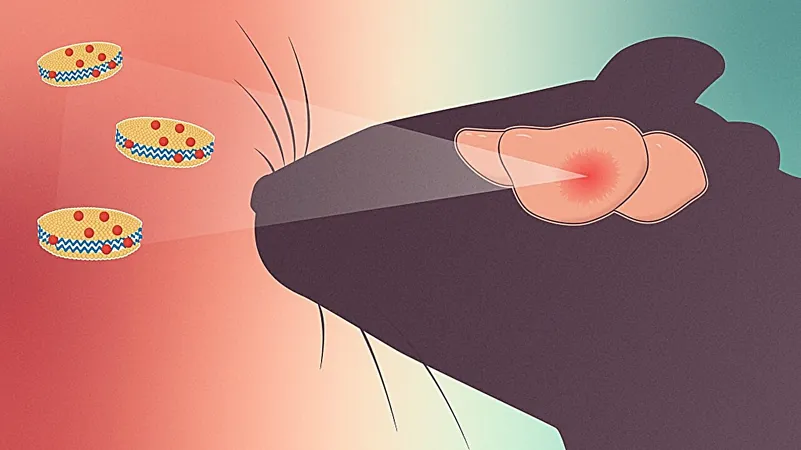
In an exciting breakthrough, researchers from the University of Michigan have developed powerful nanodiscs that target cholesterol levels in GBM. By starving cancer cells of cholesterol, these innovative particles are dramatically improving survival rates in mouse models.
Maria Castro, a prominent neurosurgery professor and member of the Rogel Cancer Center, highlighted the major hurdles faced by GBM treatments. "Current surgical options often involve removing adjacent healthy tissue to halt tumor spread, while targeted drugs struggle due to the cancer’s genetic diversity and the blood-brain barrier that limits drug effectiveness," Castro explained.
How Do These Nanodiscs Work?
The research reveals that GBM tumors depend on cholesterol for growth but can’t produce enough on their own, forcing them to scavenge from surrounding cells. The team created specialized nanodiscs that, when injected into tumor cavities post-surgery, can significantly reduce cholesterol levels in the affected cells.
"We aimed to offer surgeons a more effective way to administer treatment post-tumor removal to combat the toxic side effects of traditional chemotherapy," said Troy Halseth, a co-author of the study.
A Winning Combination: Nanodiscs and Radiation
When combined with standard radiation therapy, more than 60% of treated mice thrived compared to those receiving radiation alone. "Integrating our treatment with radiation is crucial because it reflects the current standard of care for GBM," remarked Anzar Mujeeb, another co-author.
This new approach not only preserved normal brain structure but also showed no harmful side effects.
Boosting the Body's Defense Against Cancer
The nanodiscs are also cleverly designed with CpG oligonucleotides that trigger the immune system. This dual action not only attacks the tumor but helps the body remember and fight any future recurrences.
"The real threat for glioblastoma patients is often not the initial tumor but its return after surgery. Our goal was to tackle that challenge effectively," Castro emphasized.
Promising Future Ahead
Remarkably, 68% of the mice that survived the initial tumor eradicated a second tumor introduced later. As the research team prepares for clinical trials and seeks to scale up production, this groundbreaking study showcases the power of teamwork between cancer biologists and pharmaceutical experts at U-M.
With the promise of a new weapon in the battle against one of cancer's most formidable foes, there is renewed hope for future glioblastoma patients.
 Brasil (PT)
 Canada (EN)
 Chile (ES)
 Česko (CS)
 대한민국 (KO)
 España (ES)
 France (FR)
 Hong Kong (EN)
 Italia (IT)
 日本 (JA)
 Magyarország (HU)
 Norge (NO)
 Polska (PL)
 Schweiz (DE)
 Singapore (EN)
 Sverige (SV)
 Suomi (FI)
 Türkiye (TR)
 الإمارات العربية المتحدة (AR)