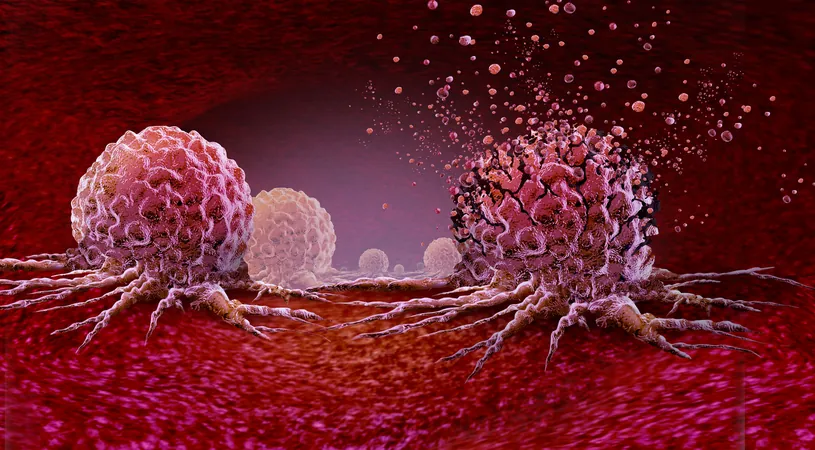
Revolutionary Pyrotinib Therapy Boosts Survival Rates for HER2+ Breast Cancer Patients with Liver Metastases
2025-04-25
Author: Li
Breakthrough in Breast Cancer Treatment!
A groundbreaking study has revealed that pyrotinib-based therapy could be a game-changer for patients battling human epidermal growth factor receptor 2-positive (HER2+) advanced metastatic breast cancer (mBC) with liver metastases. This remarkable finding, published in *Frontiers in Oncology*, highlights the urgent need for innovative treatments in a disease notoriously tough to manage.
A Tough Battle Against Aggressive Cancer
HER2+ breast cancer is one of the most aggressive forms of the disease. Sadly, it often progresses to metastatic stages, where treatment becomes significantly more complicated. Patients facing this advanced complication find themselves at a higher risk of mortality, particularly when their cancer spreads to vital organs like the liver.
Liver Metastases: A Lifeline Needed
The liver is a common site for metastases in breast cancer, presenting a particularly daunting treatment landscape. Without intervention, patients with liver metastases face a grim prognosis, with survival rates painfully low—only 8.5% qualify for five-year survival. These alarming statistics underscore the desperate need for advanced therapeutic options.
Enter Pyrotinib: The New Hope
Pyrotinib, a promising tyrosine kinase inhibitor, demonstrates impressive anti-tumor activity in treating HER2+ mBC. Initially granted conditional approval in China back in 2018, this drug has since been embraced nationally for use alongside capecitabine in advanced HER2+ cases. Recent clinical trials suggest that the combination therapy significantly enhances median progression-free survival (PFS) over traditional treatments, making it a beacon of hope for many.
Diving into the Data: Who Benefits Most?
In a detailed analysis involving 91 patients treated with pyrotinib from March 2019 to April 2022, researchers divided participants into two groups based on the presence or absence of liver metastases. The results were telling: those with liver metastases had a median overall survival (OS) of only 15.8 months compared to 31.4 months for those without, emphasizing the need for targeted therapy.
Spotlight on Younger Patients
Univariate analysis revealed younger patients, especially those under 60 with negative progesterone receptor expression and higher Ki67 levels, stood to gain the most from pyrotinib treatment. Meanwhile, the adverse effects included higher instances of anemia and elevated liver enzymes in those with liver metastases.
Call for Further Research
With these promising findings, it's clear that pyrotinib holds the potential to enhance survival for patients grappling with HER2+ mBC and liver metastases. However, further large-scale studies are essential to solidify its effectiveness and refine treatment protocols.
The Future Looks Bright!
In a field where every month counts, the advancements brought by pyrotinib offer a glimmer of hope, promising to transform the landscape of treatment for one of cancer's most formidable foes. Stay tuned as research continues to unfold!

 Brasil (PT)
 Canada (EN)
 Chile (ES)
 Česko (CS)
 대한민국 (KO)
 España (ES)
 France (FR)
 Hong Kong (EN)
 Italia (IT)
 日本 (JA)
 Magyarország (HU)
 Norge (NO)
 Polska (PL)
 Schweiz (DE)
 Singapore (EN)
 Sverige (SV)
 Suomi (FI)
 Türkiye (TR)
 الإمارات العربية المتحدة (AR)