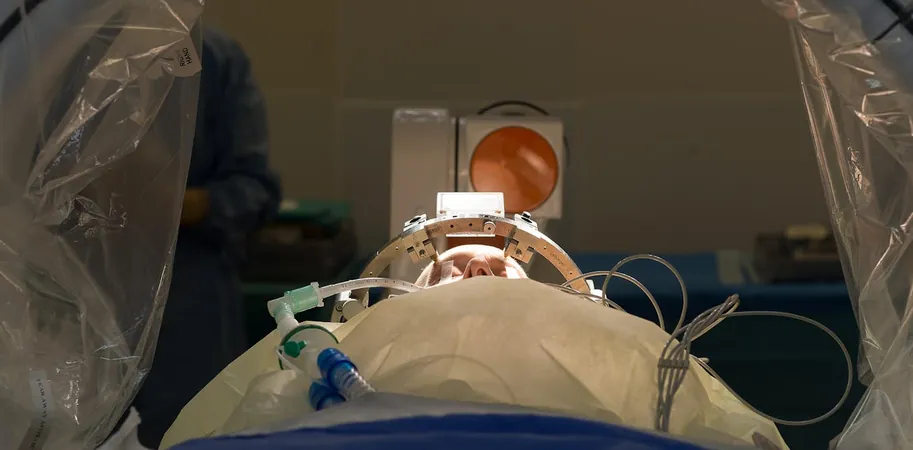
Revolutionary Smart Brain Implants Transforming Lives of Parkinson's Patients
2025-04-22
Author: Ming
The Unraveling Mystery of the Human Brain
The human brain, a marvel of complexity, has historically faced simplistic treatment options. Surgeons were once forced to damage brain structures blindly in hopes of fixing the imbalances that lead to disorders. This hit-or-miss approach often relied on trial and error, leaving patients at the mercy of uncertain outcomes.
A Groundbreaking Discovery
In 1987, a pivotal moment occurred when French neurosurgeon Alim-Louis Benabid stumbled upon a remarkable discovery during surgery. While seeking to locate the correct area for lesioning, he realized that electrical stimulation could mimic the effects of an actual lesion. This revelation birthed deep brain stimulation (DBS), where a pacemaker-like device sends electrical pulses to specific brain regions.
The Evolution of Treatment
Since the early 2000s, DBS has been a beacon of hope for advanced Parkinson's patients. Until recently, once the settings were established by a specialist, they rarely changed, limiting the treatment's effectiveness based on the patient's fluctuating condition.
The Dawn of Adaptive Deep Brain Stimulation
This year marks a turning point in neurological treatment with the approval of adaptive deep brain stimulation by health authorities in the US and Europe. This innovative method uses advanced computers to read brain activity, intelligently adjusting stimulation levels to optimize symptom relief.
Personalized Treatment for a Complex Disorder
Parkinson's disease presents a unique challenge due to its unpredictable symptoms, often influenced by medication timing. While some patients benefit from continuous stimulation, others experience fluctuating effects. The goal now is to administer stimulation only when it is most beneficial.
The Science Behind the Innovation
The foundation for this adaptive technology was laid over two decades ago at University College London, where researchers discovered specific brain waves that indicated worsening symptoms when medication was halted. This finding paved the way for a system akin to a thermostat, activating the stimulator as needed.
From Bulky Devices to Compact Innovations
Initially cumbersome and confined to hospital use, the technology has now shrunk into a compact device small enough to be implanted in a patient’s chest, revolutionizing how treatments are delivered.
Navigating New Challenges
While adaptive stimulation offers enhanced patient care, it also introduces complexities for clinicians. Doctors must juggle numerous settings to ensure effective treatment with minimal side effects. The challenge lies in testing these adaptive settings over extended periods to align with a patient's daily life.
Unlocking New Potential
With the advent of adaptive stimulators equipped with sensing capabilities, teams can monitor brain wave patterns over time, offering insights into the management of not only Parkinson's but also other mental health issues such as depression and cognitive decline. Leveraging AI technology could reveal crucial correlations that might elude traditional analysis.
A Bright Future for Neurological Treatments
As research continues to unravel the complexities of brain circuits responsible for various neurological and psychiatric symptoms, the future of deep brain stimulation looks promising. Recent studies have illuminated paths to treating other conditions like depression, OCD, and migraines, broadening the horizons of neurological care.


 Brasil (PT)
 Canada (EN)
 Chile (ES)
 Česko (CS)
 대한민국 (KO)
 España (ES)
 France (FR)
 Hong Kong (EN)
 Italia (IT)
 日本 (JA)
 Magyarország (HU)
 Norge (NO)
 Polska (PL)
 Schweiz (DE)
 Singapore (EN)
 Sverige (SV)
 Suomi (FI)
 Türkiye (TR)
 الإمارات العربية المتحدة (AR)