Revolutionary Weather-Inspired Technique Transforms Electrocatalyst Degradation Predictions!
2025-04-21
Author: Rajesh
Breakthrough in Energy Technology
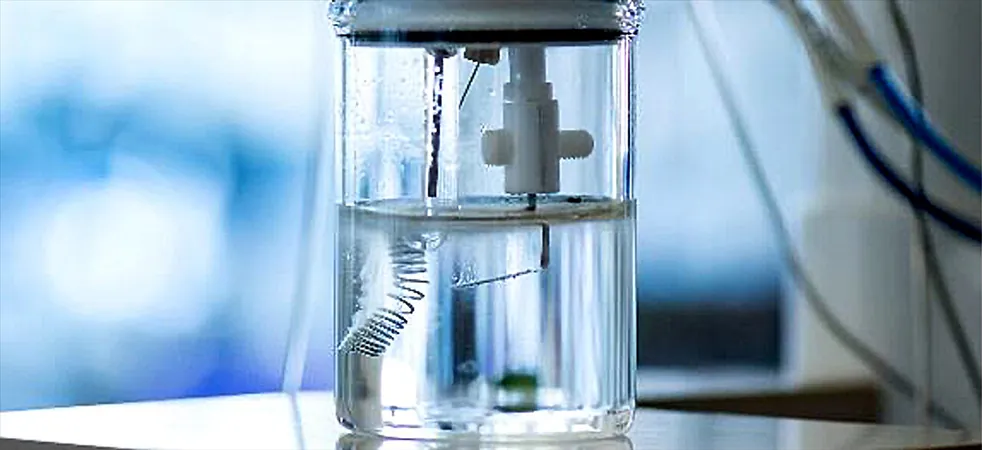
A groundbreaking research team at NIMS has unveiled a revolutionary approach that could change the game for water electrolyzers—an essential technology for producing green hydrogen. By leveraging data assimilation, a technique borrowed from weather forecasting, they have made astonishing strides in predicting how electrocatalysts degrade over time.
Quick and Accurate Predictions!
After analyzing just 300 hours of experimental data, this innovative method reliably forecasted the degradation of electrocatalytic materials after an impressive 900 hours of water electrolysis. This leap in predictive capability not only streamlines the comparison of different electrocatalysts but also paves the way for deeper investigations into their degradation mechanisms, speeding up the creation of more efficient and durable materials.
A Sustainable Energy Future Depends on This!
Transitioning to green hydrogen as a mainstream energy source is vital for a sustainable future. This requires widespread installation of water electrolyzers, which produce hydrogen fuel without carbon dioxide emissions. Hence, developing robust electrocatalysts is crucial to enhancing the efficiency and lifespan of these systems.
The Challenge: Time-Intensive Testing
Traditionally, assessing the durability of electrocatalysts could take thousands—even tens of thousands—of hours. This significant time investment underscores the urgent need for faster, more accurate evaluation techniques.
Data Assimilation: A Game Changer!
The NIMS team ingeniously integrated data assimilation into their predictive models, which combines observed data with numerical simulations to enhance accuracy. This method iteratively refines theoretical predictions based on new experimental observations while accounting for data uncertainties.
Stunning Results!
The team developed a straightforward mathematical model to simulate electrocatalyst degradation, focusing on surface dissolution and related mechanisms. The model's accuracy was first validated with initial degradation data, and later put to the test with approximately 900 hours of long-term experimental data. Remarkably, only the first 300 hours of data were necessary to achieve a degradation prediction with a mere 4% margin of error!
Looking Ahead: The Future of Electrocatalysts
Buoyed by their success, the team has ambitious plans for future research. They aim to refine their algorithm even further, making it possible to predict electrocatalyst degradation using data collected from even shorter experimental periods. This could revolutionize how quickly and accurately we understand electrocatalyst behavior, leading to faster and more sustainable energy solutions.
 Brasil (PT)
 Canada (EN)
 Chile (ES)
 Česko (CS)
 대한민국 (KO)
 España (ES)
 France (FR)
 Hong Kong (EN)
 Italia (IT)
 日本 (JA)
 Magyarország (HU)
 Norge (NO)
 Polska (PL)
 Schweiz (DE)
 Singapore (EN)
 Sverige (SV)
 Suomi (FI)
 Türkiye (TR)
 الإمارات العربية المتحدة (AR)