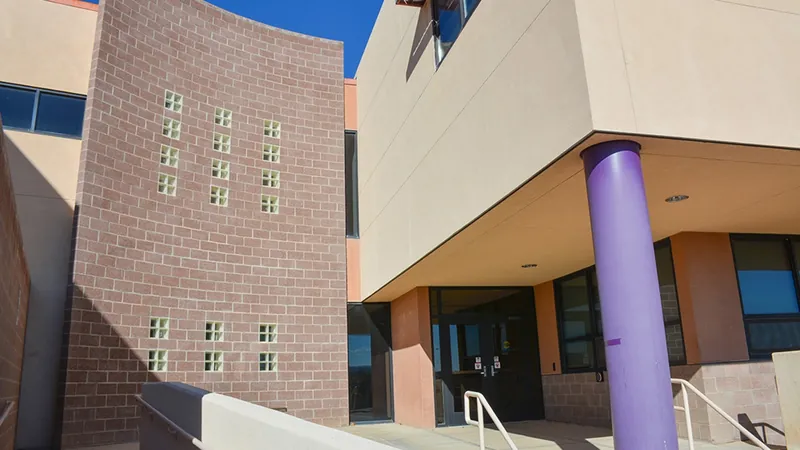
Revolutionizing Climate Action: UNM-Gallup Professor's Impactful Research
2025-04-21
Author: Mei
A Bold New Vision for Environmental Decision Making
In an exciting development for climate science, Associate Professor Antoinette Abeyta from The University of New Mexico-Gallup has co-authored a groundbreaking paper that reimagines how environmental decisions are made. Published in the prestigious journal *Nature Climate Change*, this influential work advocates for a data-driven approach that prioritizes equity in ecological forecasting.
The Urgency of Near-Term Forecasting
Co-written by Abeyta and 22 fellow experts from the Ecological Forecasting Initiative, the paper titled 'Near-Term Ecological Forecasting for Climate Change Action' emphasizes the urgent need for shorter-term ecological forecasts—those which inform decisions in mere weeks or months rather than decades. According to the authors, while traditional forecasts have often focused on projections for the year 2100 and beyond, the climate crisis is unfolding right now. Immediate and actionable insights are essential.
Abeyta draws a parallel with the evolution of meteorology, which shifted to a more dynamic and iterative approach to weather forecasting. 'Understanding longer-term changes is important,' she states, 'but humans operate on shorter timescales. We need forecasts that reflect that urgency.'
Championing Equity in Science
Another pivotal aspect of this paper is its commitment to equity and inclusion in environmental science. Abeyta highlights her institution’s role as a minority-serving college, which has been notably engaged with EFI since around 2020. This partnership aims to broaden access to environmental data science education, a field often dominated by elite graduate programs and affluent institutions.
'There's a stark deficit of training opportunities at community colleges and institutions serving tribal populations,' Abeyta contends. This gap is critical, especially since low-income and minority communities are frequently the first to bear the brunt of climate impacts. Abeyta's mission is to change that.
Empowering Communities Through Accessible Technology
Recognizing the barriers that advanced data science poses—such as reliance on powerful computers and high-speed internet—Abeyta is committed to designing training models that are accessible to those in rural settings. 'We want to equip individuals with the tools they need in a way that is reachable for everyone,' she asserts. 'This could provide individuals with a sense of empowerment, allowing them to advocate for their communities effectively.'
A Call to Action
As climate challenges grow more pressing, Abeyta’s work represents a vital shift toward inclusive and actionable climate strategies. By focusing on near-term forecasting and equitable training, her research not only addresses immediate environmental concerns but also fosters a more diverse and resilient scientific community. This could very well pave the way for smarter, community-oriented climate action that leaves no one behind.


 Brasil (PT)
 Canada (EN)
 Chile (ES)
 Česko (CS)
 대한민국 (KO)
 España (ES)
 France (FR)
 Hong Kong (EN)
 Italia (IT)
 日本 (JA)
 Magyarország (HU)
 Norge (NO)
 Polska (PL)
 Schweiz (DE)
 Singapore (EN)
 Sverige (SV)
 Suomi (FI)
 Türkiye (TR)
 الإمارات العربية المتحدة (AR)