Revolutionizing Concrete: How PHNX Materials is Turning Coal Waste into a Climate Game-Changer
2025-04-21
Author: Wei Ling
A Hidden Climate Solution from Coal Ash
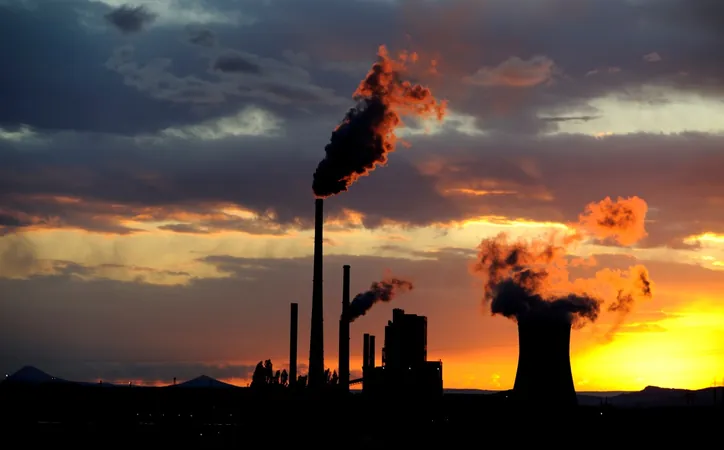
Coal-fired power plants have long been associated with environmental harm, contributing to climate change and public health crises. However, hidden within their exhaust lies an unexpected hero: coal ash.
Transforming Waste into Resource
According to Krish Mehta, co-founder and CEO of PHNX Materials, this ash can replace up to 30% of traditional cement in concrete. This shift not only minimizes the material's carbon footprint but also repurposes waste that would otherwise end up in landfills.
PHNX Materials has developed a groundbreaking process to purify fly ash, removing undesirable sulfur and carbon. By preparing this ash, they create a clean resource for concrete companies while extracting valuable sulfur and aluminum—a move that could redefine industry standards.
Funding for a Greener Future
Recently, PHNX attracted attention with a $2.5 million seed funding round. This investment, spearheaded by Divergent Capital, KdT Ventures, and Overture, signals a strong belief in their potential to innovate within the concrete industry.
Historical Significance of Fly Ash
For centuries, ash has played a pivotal role in concrete. The Romans utilized volcanic ash, while modern governments have turned to fly ash from coal plants for its stabilizing properties. In fact, California mandates a minimum of 25% fly ash in its concrete.
Jorge Osio-Norgaard, co-founder and CTO of PHNX, points out that fly ash not only stabilizes concrete but also ensures its longevity. 'When investing billions into infrastructure, durability is key,' he explains.
Impact of Coal Plant Closures
The decline of coal-fired power plants has drastically reduced the availability of fly ash, from 51% of U.S. electricity generation down to 15%. As these plants close, new industries have emerged to harvest and process coal ash, but the quality isn’t always suitable for concrete.
The subsequent fly ash shortage is driving prices up and forcing concrete companies to revert to traditional cement, which significantly increases costs and carbon emissions. Currently, concrete mixes average only 8% fly ash when they could include up to 30%.
Unlocking a Sustainable Future
PHNX's mission focuses on unlocking vast sources of ash, taking it directly from landfills, and extracting both harmful impurities and rare earth elements. This innovative approach not only provides concrete manufacturers with cleaner materials but also opens opportunities in other sectors, such as agriculture through sulfur for fertilizers.
As Mehta asserts, 'We believe that tapping into a new supply of ash is the most efficient way to decarbonize the concrete industry.' This could be a transformative step towards a sustainable future, challenging conventional methods and redefining waste management in construction.
 Brasil (PT)
 Canada (EN)
 Chile (ES)
 Česko (CS)
 대한민국 (KO)
 España (ES)
 France (FR)
 Hong Kong (EN)
 Italia (IT)
 日本 (JA)
 Magyarország (HU)
 Norge (NO)
 Polska (PL)
 Schweiz (DE)
 Singapore (EN)
 Sverige (SV)
 Suomi (FI)
 Türkiye (TR)
 الإمارات العربية المتحدة (AR)