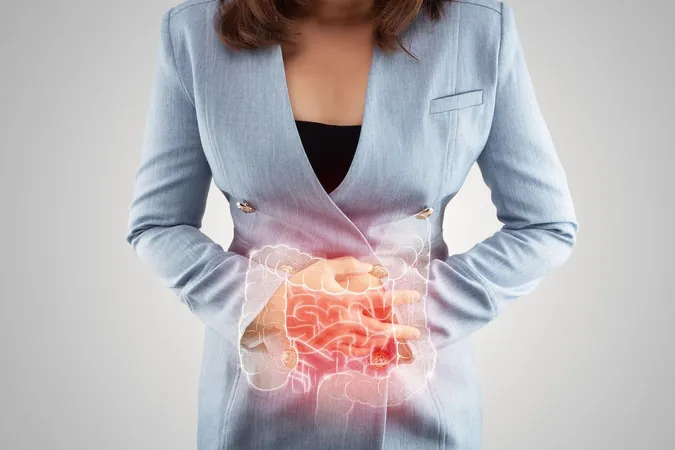
Revolutionizing IBD Treatment: The Rise of Biosimilars
2025-04-23
Author: John Tan
Biosimilars: A Game Changer in IBD Care
In the battle against inflammatory bowel disease (IBD), biosimilars are emerging as a powerful ally. Recent findings indicate that these cost-effective alternatives to traditional biologics maintain similar efficacy and safety while significantly lowering treatment costs. This breakthrough is crucial as IBD, which includes conditions like Crohn's disease and ulcerative colitis, now affects nearly 7 million individuals globally.
A Global Health Challenge
As IBD cases continue to rise, driven by both environmental changes and genetic predispositions, the financial strain of expensive biologic therapies presents a major hurdle, particularly in low- and middle-income countries. Biosimilars provide a glimmer of hope, offering the potential for broader access to essential treatments for all patients.
Understanding IBD and Its Implications
The complexities of IBD are further underscored by its diverse causes, spanning genetic, environmental, and microbiome factors. With more than 240 genetic regions identified as related to IBD, understanding its pathophysiology is critical. The disease represents not just a medical issue but a socio-economic challenge that necessitates innovative solutions.
Emerging Therapies: Balancing Benefits and Risks
Current IBD treatments range from biologics and small molecules targeting inflammation to newer options like Janus kinase inhibitors, which offer rapid relief. However, these therapies are not without risks, including potential for serious infections and immunologic responses. The complexity of biologic development necessitates vigilant monitoring and tailored patient care.
Innovative Drug Delivery Systems: The Next Frontier
An exciting avenue in IBD management is the development of innovative drug delivery systems. These technologies aim to enhance treatment efficacy by improving drug targeting and minimizing side effects. Approaches utilizing passive targeting nanoparticles or mucoadhesive systems are demonstrating promise, and further research could unlock new therapeutic potentials.
Recommendations for Advancing Research
Experts advocate for focused research to overcome current challenges in IBD care, emphasizing the need for enhanced protection against enzymatic degradation and improved site-specific drug delivery. These advancements could revolutionize the way IBD is treated, making therapies safer and more effective for patients worldwide.

 Brasil (PT)
 Canada (EN)
 Chile (ES)
 Česko (CS)
 대한민국 (KO)
 España (ES)
 France (FR)
 Hong Kong (EN)
 Italia (IT)
 日本 (JA)
 Magyarország (HU)
 Norge (NO)
 Polska (PL)
 Schweiz (DE)
 Singapore (EN)
 Sverige (SV)
 Suomi (FI)
 Türkiye (TR)
 الإمارات العربية المتحدة (AR)