Revolutionizing Our Understanding of Earth's Forests: The Groundbreaking Biomass Mission
2025-04-23
Author: John Tan
Unveiling the Secrets of Our Forests
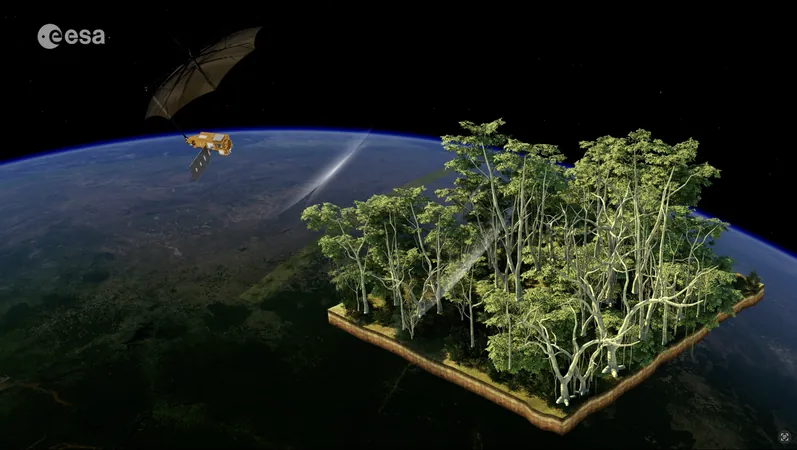
The European Space Agency (ESA) is on the brink of a major breakthrough with its innovative Biomass mission, aimed at transforming our insights into the health and evolution of the planet's forests. This cutting-edge initiative is not just about tracking tree growth; it's about illuminating the critical role these forests play in our global carbon cycle.
What Makes Biomass Unique?
Unlike any satellite before it, Biomass is equipped with a revolutionary fully polarimetric P-band synthetic aperture radar designed for interferometric imaging. This sophisticated technology utilizes a long wavelength of about 70 cm, allowing the radar signals to penetrate through dense forest canopies and into the depths of the forest layers.
Measuring Carbon Storage
By targeting the biomass—which includes the woody trunks, branches, and stems—this mission will provide unprecedented insights into how trees sequester carbon. Understanding this biomass is crucial, as trees are vital allies in combating climate change and regulating our atmosphere.
The Impact of Biomass on Climate Studies
As our planet faces escalating environmental challenges, the data gathered by the Biomass mission will be instrumental for researchers and policymakers alike. This will enhance predictive models for climate change, providing clarity on how our forests are adapting and the implications of these changes on global warming.
A New Era in Satellite Technology
The Biomass mission marks not just a step forward in environmental monitoring but a leap into the future of satellite technology. With a focus on precision and clarity, it promises to unveil the intricate dynamics of forest ecosystems like never before.
Join the Mission!
As we look forward to the insights from this pioneering mission, one thing is clear: Biomass is set to redefine our understanding of Earth’s forests and their critical role in sustaining our planet’s health.
 Brasil (PT)
 Canada (EN)
 Chile (ES)
 Česko (CS)
 대한민국 (KO)
 España (ES)
 France (FR)
 Hong Kong (EN)
 Italia (IT)
 日本 (JA)
 Magyarország (HU)
 Norge (NO)
 Polska (PL)
 Schweiz (DE)
 Singapore (EN)
 Sverige (SV)
 Suomi (FI)
 Türkiye (TR)
 الإمارات العربية المتحدة (AR)