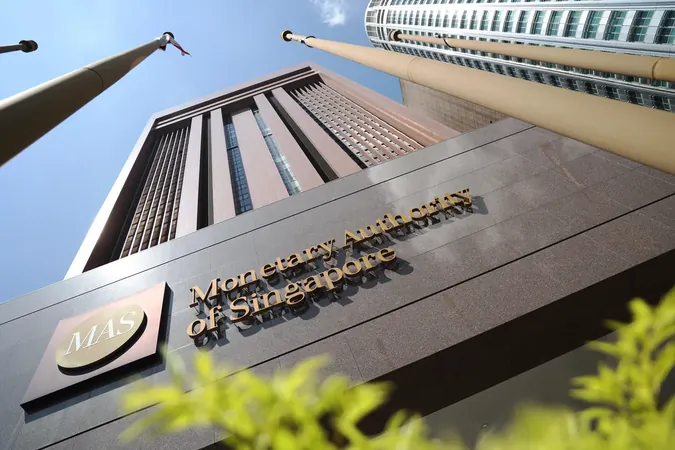
Revolutionizing Retail Investing: MAS’s Bold Move Towards Private Markets in Singapore
2025-04-20
Author: Daniel
A Game-Changer for Retail Investors
The Monetary Authority of Singapore (MAS) is set to transform the investment landscape in the Lion City with its groundbreaking proposal for a new regulatory framework focusing on private markets. This initiative is driven by a surging demand from retail investors eager to explore new investment opportunities, coupled with industry players keen to cater to these needs.
Unlocking Private Markets for Everyone
Traditionally, private markets have been exclusive realms for accredited and institutional investors—essentially a VIP club with high entry barriers. Similar to the U.S. Securities and Exchange Commission, MAS has maintained strict safeguards that protect everyday investors from the complexities and risks associated with private assets. However, the investment climate is evolving, and so are retail investor appetites.
Modern retail investors are becoming increasingly tech-savvy and are actively seeking alternatives to traditional public markets. They are particularly drawn to the dynamism of the private sector, especially within the thriving startup and innovation ecosystem. Unfortunately, many retail investors find themselves locked out due to stringent accreditation requirements and have resorted to riskier means like equity crowdfunding to access private investments.
A New Framework for Access and Growth
Enter the long-term investment fund (LIF) framework—the proposed solution designed to provide a structured and regulated pathway for retail investors to dive into private equity, credit, and infrastructure investments. This plan suggests utilizing existing fund standards to create a new landscape where everyday investors are not just participants but beneficiaries of private market growth.
The LIF framework envisions two main structures: direct funds that allow retail investors to invest directly in private market assets, ensuring transparency, and long-term investment fund-of-funds (LIFFs), which leverage experienced fund managers to create diversified portfolios—catering to various risk appetites.
Education and Accessibility Are Essential
For this progressive framework to succeed, MAS must prioritize investor education. Unlike public markets, private investments come with unique risks, including lower liquidity and limited transparency. Investors need clear disclosures and a solid understanding of these risks to navigate this new landscape confidently.
Moreover, questions linger about accessibility: Will there still be tiered eligibility to meet varying risk profiles? Striking a balance between safeguarding retail investors and providing meaningful investment opportunities will be crucial.
Is Singapore Ready for This Shift?
Another vital aspect is ecosystem readiness. For this ambitious framework to thrive, fund managers and intermediaries will need to adapt and prepare for a new wave of investors. This effort requires robust regulatory support and an adaptable infrastructure that keeps pace with evolving market needs.
What Lies Ahead for Singapore’s Investment Landscape?
As MAS works to finalize this framework, several critical questions must be answered, particularly concerning fund valuation and liquidity. If shares from future fund structures can be traded on exchanges, how will their prices align with the actual asset values?
This presents unique challenges and opportunities, especially for tech providers looking to enhance data transparency and valuation practices.
Conclusion: A New Era of Investment Awaits
Ultimately, MAS’s proposal signals a pivotal moment for retail investing in Singapore—a move that aims to create a more inclusive and accessible investment ecosystem. This is not just about breaking down barriers; it’s about building a stronger foundation that serves a broader array of investors, making private market opportunities a reality for all.
 Brasil (PT)
 Canada (EN)
 Chile (ES)
 Česko (CS)
 대한민국 (KO)
 España (ES)
 France (FR)
 Hong Kong (EN)
 Italia (IT)
 日本 (JA)
 Magyarország (HU)
 Norge (NO)
 Polska (PL)
 Schweiz (DE)
 Singapore (EN)
 Sverige (SV)
 Suomi (FI)
 Türkiye (TR)
 الإمارات العربية المتحدة (AR)