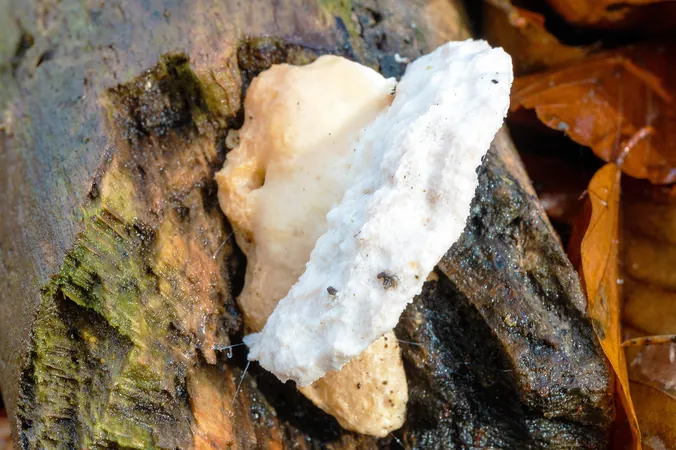
Scientists Unveil the World's Most Bitter Substance: The Bitter Bracket Mushroom
2025-04-15
Author: Li
The Dark Side of Bitterness
We often think of bitterness as just an unpleasant taste, something that makes us recoil at the sight of certain vegetables. But the truth runs much deeper. The bitter flavor comes from a myriad of complex molecules, and the science behind our reaction to them is still shrouded in mystery.
A Bitter Discovery in the Forest
In a groundbreaking study, researchers from the Leibniz Institute for Food Systems Biology and the Leibniz Institute of Plant Biochemistry have spotlighted a forest mushroom known as Amaropostia stiptica, or the bitter bracket mushroom, revealing it as a major player in the world of bitterness.
This unique fungus thrives on decaying wood, typically found in tropical and subtropical forests. With its shelf-like appearance, this mushroom might not catch your eye due to its bland creamy beige coloration, but its tooth-chattering bitterness earns it a notorious reputation.
Why Amaropostia Stiptica Matters
Though it's neither edible nor medicinal, the bitter bracket mushroom plays a vital role in the ecosystem by breaking down tough plant material and recycling nutrients. Without such organisms, life in the forest would be unprecedentedly difficult.
Bitter Compounds: A Complex Mystery
Traditionally, much of the research on bitter compounds has focused on flowering plants or manufactured substances. The BitterDB database contains over 2,400 known bitter molecules, with only about 800 linked to specific bitter taste receptors in humans. However, knowledge around bitterness from fungi, bacteria, and animal sources remains largely unexplored.
The Complexity of Bitter Receptors
Interestingly, bitter taste receptors are present in more than just our tongues; they are found throughout our body in places like the stomach, intestines, and even on some blood cells. This raises fascinating questions about their roles beyond mere taste, suggesting they could be linked to various bodily functions.
Uncovering New Bitter Treasures
To unravel this intricate web, the research team delved into lesser-known sources of bitterness, like the bitter bracket mushroom. They utilized advanced analytical techniques to identify three new bitter compounds from this fungus and discovered their chemical structures.
One standout molecule, oligoporin D, astonishingly activates the TAS2R46 receptor at extremely low concentrations. Just 63 micrograms per liter activates this receptor, equivalent to dissolving a tiny pinch of the chemical into a vast amount of water!
Bitterness: A Key to Better Health?
This study doesn't just uncover new bitter compounds; it hints at a broader potential for enhancing our diets and health. As researchers learn more about these natural bitter substances, they foresee applications that could lead to the development of foods that not only taste good but also support digestion and overall well-being.
As new findings continue to emerge, the world of bitterness may hold secrets to how our taste influences our health. Delving into these bitter compounds paints a picture of a complex interplay between taste, nutrition, and the ecosystems in which we live.
A Journey of Discovery
The study details have been published in the Journal of Agricultural and Food Chemistry, marking a significant step in the exploration of bitterness. As science peels away the layers of the bitter flavor profile, we uncover a world richer and more intricate than we ever imagined.

 Brasil (PT)
 Canada (EN)
 Chile (ES)
 Česko (CS)
 대한민국 (KO)
 España (ES)
 France (FR)
 Hong Kong (EN)
 Italia (IT)
 日本 (JA)
 Magyarország (HU)
 Norge (NO)
 Polska (PL)
 Schweiz (DE)
 Singapore (EN)
 Sverige (SV)
 Suomi (FI)
 Türkiye (TR)
 الإمارات العربية المتحدة (AR)