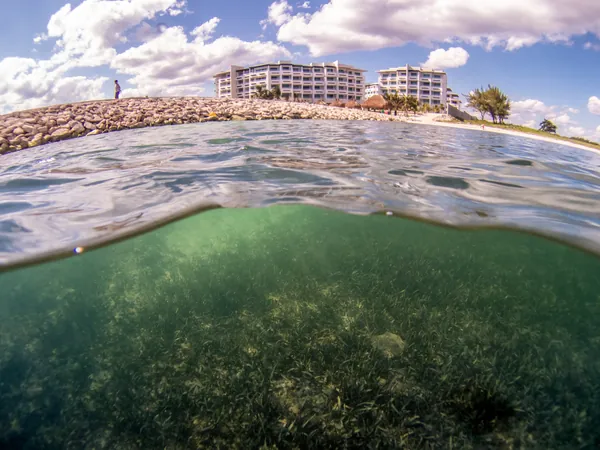
Seagrass Meadows in Peril: Alarming New Findings Within Protected Areas
2025-04-23
Author: Daniel
Seagrass Meadows: Vital Yet Vulnerable
A groundbreaking global analysis reveals that many of the world's most vulnerable seagrass meadows are located within designated Marine Protected Areas (MPAs). This discovery raises serious concerns about the effectiveness of current protections in safeguarding these crucial coastal ecosystems, pushing for a reevaluation of global ocean conservation strategies.
Mapping Human Pressures on Seagrass
Led by scientists from the NGO Project Seagrass, the study unveils one of the most detailed global maps illustrating human pressures threatening seagrass meadows that support fisheries and marine biodiversity across more than 150 countries. This critical research is published in the journal *Environmental Research: Ecology*.
With input from over 1,000 citizen scientists, researchers mapped threats at over 1,200 sites across 86 countries, uncovering that most seagrass ecosystems face a combination of risks, including coastal development, pollution, boating, and destructive fishing practices.
A Reality Check for Marine Conservation
Alarmingly, half of the seagrass sites exposed to human pressure are found within MPAs—designated safe havens meant to protect biodiversity. Lead author Dr. Benjamin Jones states, "Instead of being refuges, many of these meadows are under significant threats due to land-based human activities. This is a major alert and presents a unique chance to rethink how we safeguard seagrass habitats."
Highlighting Areas of Urgency
Analyzing data collected through SeagrassSpotter.org, the team created a high-resolution vulnerability map, pinpointing critical hotspots in regions such as Southeast Asia, the Mediterranean, and parts of the Caribbean. Conversely, the study identifies areas where timely conservation efforts could yield impactful changes.
A Call for Action: Bridging the Gap
The findings underscore a significant disconnect between the establishment and actual implementation of protections in global MPA networks, with seagrass in 4.4% of these areas under threat. Dr. Jones emphasizes, "Just drawing lines on a map isn’t sufficient. To genuinely protect seagrass meadows and the benefits they provide, we must manage land-based impacts."
The study calls for urgent enhancements in protection efforts within existing MPAs, prioritizing high-risk areas, and broadening conservation initiatives to include ecologically rich yet underrepresented locales. Dr. Richard Unsworth from Swansea University highlights the need for effective marine spatial planning and collaboration globally.
Targets for the Future
To meet the United Nations' "30x30" initiative—aiming to conserve 30% of Earth's land and oceans by 2030—the research emphasizes that protecting these critical areas is as vital as the quantity of land and ocean being protected. It suggests that to achieve the Kunming–Montreal Global Biodiversity Framework objectives, net seagrass losses of around 3,000 km2 must be avoided annually from 2030, alongside the restoration of approximately 95,000 km2.
Solutions Within Reach
The publication's interactive map is poised to serve as an essential resource for policymakers, conservationists, and local communities, directing their efforts toward the most at-risk areas. According to Dr. Jones, "Seagrass meadows are the ocean's quiet powerhouses. This new map empowers us to act decisively—not just to halt losses, but to truly invest in protection where it's critically needed."
Conservation approaches can extend beyond ocean-centric measures; they must also involve land-based restoration and effective watershed management to tackle nutrient pollution.
Empowering Citizen Science
This global analysis marks a pioneering use of data from SeagrassSpotter.org, a citizen science platform launched a decade ago aimed at engaging the public in seagrass conservation. With thousands of observations contributed by volunteers worldwide, Project Seagrass hopes to motivate continued participation and inspire further scientific exploration utilizing this extensive global dataset.


 Brasil (PT)
 Canada (EN)
 Chile (ES)
 Česko (CS)
 대한민국 (KO)
 España (ES)
 France (FR)
 Hong Kong (EN)
 Italia (IT)
 日本 (JA)
 Magyarország (HU)
 Norge (NO)
 Polska (PL)
 Schweiz (DE)
 Singapore (EN)
 Sverige (SV)
 Suomi (FI)
 Türkiye (TR)
 الإمارات العربية المتحدة (AR)