Shocking Discovery: A Parasitic Worm Might Increase Your Risk of Cervical Cancer!
2025-04-23
Author: Nur
Is a Parasite the New Cervical Cancer Threat?
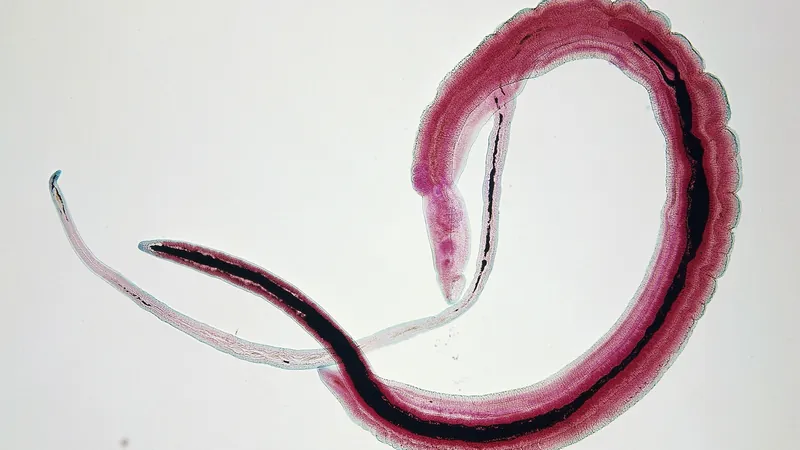
A ubiquitous parasite found in Africa, known as *Schistosoma haematobium*, may be quietly setting the stage for cervical cancer— and a common treatment for this infection might actually heighten that risk, according to a recent study.
What You Need to Know About the Research
Presented at the ESCMID Global 2025 conference, this groundbreaking research revealed that while *S. haematobium* is already known to raise bladder cancer risk, it might also ignite cancer-related gene activity in the cervix, during and after an infection.
Conducted among a small group of women, more extensive trials are needed to confirm these alarming findings. Dr. Joshua Cohen, a gynecologic cancer expert, stated that understanding this link is crucial, especially in regions with limited access to clean water.
A Hidden Link to Cervical Cancer?
Globally, *S. haematobium* infects about 110 million people, yet previous studies indicate that only a mere 1.7% to 3% of cervical cancer cases in Africa can be attributed to this parasite. The primary instigator of cervical cancer remains the human papillomavirus (HPV), which is associated with nearly all cases of the disease.
Unlike HPV, which invades host DNA, *S. haematobium* harms the cervix through a different mechanism. The parasite causes schistosomiasis, characterized by symptoms like fevers and skin irritations. Researchers examined cervical tissue samples from 39 Tanzanian women, both with and without active infections, before and after treatment with praziquantel.
The Alarming Findings
The analysis unveiled several genes that exhibited unusual behaviors in infected women compared to their uninfected counterparts. Notably, four of these altered genes are linked to cancer development, usually promoting abnormal cell growth when overly active.
Post-treatment, genes responsible for inflammation and tissue repair became hyperactive. This was linked to increased blood vessel growth and reduced cell death, potentially igniting cancer-like processes, according to Dr. Anna Mertelsmann, the study's lead author.
How *S. haematobium* Could Lead to Cancer
When this parasite’s eggs embed in cervical tissue, they trigger a fierce inflammatory response that could lead to DNA damage in cervical cells. Much like its impact on bladder cancer, this mechanism raises serious concerns for women infected with *S. haematobium*. It's estimated that 40% to 70% of infected women may have these eggs in their genital area.
Not only do the eggs pose a carcinogenic risk, but the infection also induces cycles of tissue injury and healing, fostering abnormal growth. This disruption could hinder the immune system's ability to detect and eliminate precancerous cells.
Treatments That Raise Eyebrows?
Interestingly, the treatment for *S. haematobium*, praziquantel, itself might be associated with genetic changes linked to cancer risk. "We don't yet know if the infection or treatment directly causes cervical cancer," Dr. Mertelsmann advised, emphasizing the need for extensive research.
Implications for Cancer Prevention
The implications of this study could reshape cancer prevention strategies in areas where schistosomiasis is prevalent. Monitoring women diagnosed with *S. haematobium* for early signs of cervical tissue abnormalities could be vital.
Dr. Mertelsmann also advocates for additional treatments to mitigate post-treatment risks and highlights the importance of widespread HPV vaccination in reducing cervical cancer risk among women affected by schistosomiasis.
What’s Next?
Researchers are embarking on a larger study involving 180 women to validate these preliminary results and determine if women with a schistosomiasis history are at a higher risk of developing cervical cancer due to persistent HPV infections. Stay tuned for more shocking revelations!
 Brasil (PT)
 Canada (EN)
 Chile (ES)
 Česko (CS)
 대한민국 (KO)
 España (ES)
 France (FR)
 Hong Kong (EN)
 Italia (IT)
 日本 (JA)
 Magyarország (HU)
 Norge (NO)
 Polska (PL)
 Schweiz (DE)
 Singapore (EN)
 Sverige (SV)
 Suomi (FI)
 Türkiye (TR)
 الإمارات العربية المتحدة (AR)