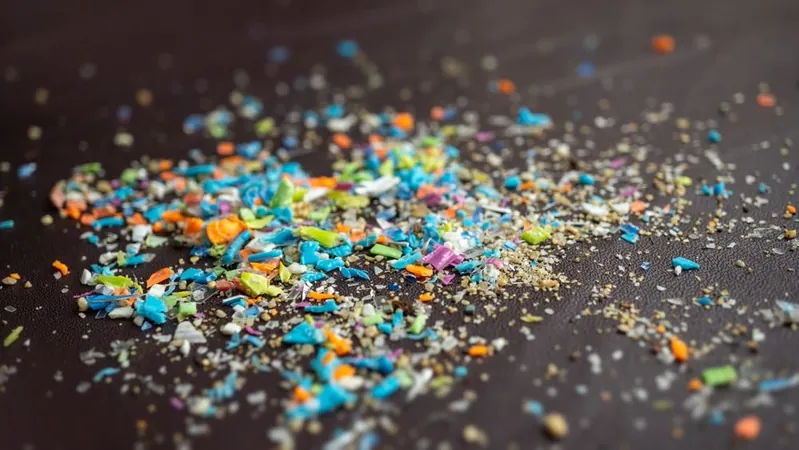
Shocking Discovery: Microplastics Slip Through Wastewater Treatment Systems!
2025-04-23
Author: Mei
Microplastics: The Hidden Threat Lurking in Our Water
A groundbreaking study by researchers at The University of Texas at Arlington has unveiled a startling reality about our wastewater treatment plants: microplastics are escaping into our environment far more than we thought. This research dives deep into the prevalence of microfibres (MFs) and microbeads (MBs) in water after it has undergone treatment.
The Disturbing Stats: What the Study Revealed
While many wastewater treatment facilities do an admirable job reducing microplastic volumes, the study found that significant amounts of MFs and MBs persist. This revelation raises alarms about potential long-term health risks, including cancer.
Senior author Un-Jung Kim, an assistant professor of earth and environmental sciences at UT Arlington, stated, "Our review shows that complete removal of microplastics is currently unattainable with existing technology. As a result, harmful microplastics are re-entering ecosystems, likely transporting toxic pollutants such as Bisphenols, PFAS, and antibiotics. These tiny threats can infiltrate our daily lives—whether we're drinking water, doing laundry, or watering our plants—putting us at risk for serious health issues like cardiovascular disease and cancer."
The Challenge: Lack of Standardized Testing Methods
One major roadblock in combating microplastics is the absence of uniform testing standards. A unified approach to defining microplastics could dramatically enhance detection and measurement across various regions, fostering a better understanding of the problem and encouraging advancements in microplastic screening technologies.
Jenny Kim Nguyen, the lead author of the study, remarked, "The effectiveness of treatment methods varies based on technology used and measurement techniques. Standardized testing could pave the way for a more effective response to the growing microplastic crisis."
Taking Action: The Need for Public Awareness and Responsibility
The researchers underscore that improving detection methods is crucial, but so is public awareness. Consumers play a vital role in this battle against microplastics.
As Kim noted, "While communities must enhance microplastic screening in wastewater and water quality monitoring, individuals can help by choosing to purchase textiles and clothing with lower plastic content. Microfibres are the most prevalent microplastics continually released through wastewater, so making informed choices can truly make a difference!"
What You Can Do Now!
It's time to act! Be mindful of your purchases and opt for eco-friendly fabrics whenever possible. Stay informed about the microplastics crisis and spread awareness—together, we can push for better technologies and policies to protect our environment and health.
 Brasil (PT)
 Canada (EN)
 Chile (ES)
 Česko (CS)
 대한민국 (KO)
 España (ES)
 France (FR)
 Hong Kong (EN)
 Italia (IT)
 日本 (JA)
 Magyarország (HU)
 Norge (NO)
 Polska (PL)
 Schweiz (DE)
 Singapore (EN)
 Sverige (SV)
 Suomi (FI)
 Türkiye (TR)
 الإمارات العربية المتحدة (AR)