Shocking Discovery: Wastewater Treatment Plants Fail to Eradicate Microplastics!
2025-04-22
Author: John Tan
Despite remarkable advances in wastewater treatment technology, a startling new study reveals that microplastics are still escaping into our environment, creating serious health and ecological concerns.
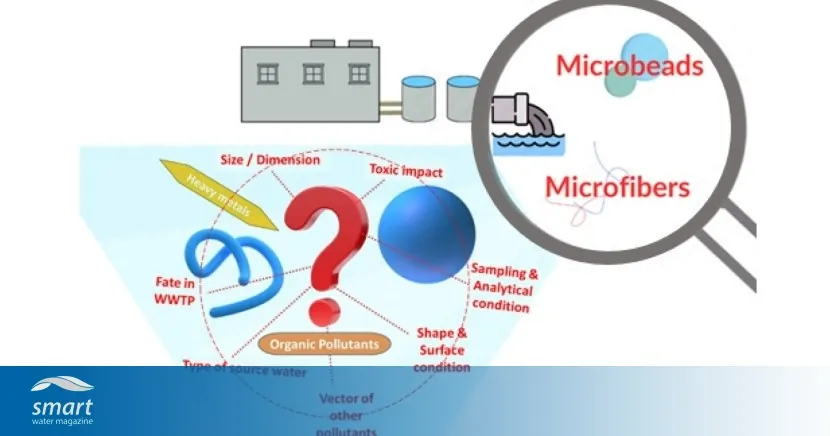
The University of Texas at Arlington research uncovers that microplastics—which are tiny plastic particles measuring five millimeters or less—are pervasive in everyday products from food packaging to clothing. When these items deteriorate, they do not vanish; instead, they fragment into minuscule pieces that infiltrate our soil and waterways.
Disturbingly, many of these microplastics are reintroduced into the ecosystem, possibly transporting harmful pollutants like Bisphenols, PFAS, and antibiotics. Dr. Un-Jung Kim, the study's senior author, emphasized, "While most facilities significantly reduce microplastic loads, achieving complete removal with current technologies is still out of reach. Exposure through daily activities like drinking water or doing laundry could lead to serious long-term health issues, including cardiovascular diseases and even cancer."
The study identifies a key hurdle: the lack of standardized testing methods for detecting microplastics. Without a unified approach to define what qualifies as a microplastic, efforts to combat their environmental impact are hampered. Jenny Kim Nguyen, the lead author, stated, "We’ve discovered that treatment effectiveness greatly varies based on the technology used and how microplastics are measured. Developing standardized testing will be crucial in tackling this escalating crisis."
Nguyen commenced this groundbreaking research as an undergraduate and is currently pursuing her master's degree while creating standardized experimental protocols for studying microplastics in both air and water.
Co-author Karthikraj Rajendiran noted, "Understanding the microplastics problem is essential for addressing its long-term health ramifications and implementing effective solutions."
The research team also underlines the importance of public awareness in combating the microplastics issue. Dr. Kim encourages consumers to make eco-friendly choices by opting for clothing and textiles with lower plastic content, emphasizing that microfibers are the most common microplastics released through wastewater.
 Brasil (PT)
 Canada (EN)
 Chile (ES)
 Česko (CS)
 대한민국 (KO)
 España (ES)
 France (FR)
 Hong Kong (EN)
 Italia (IT)
 日本 (JA)
 Magyarország (HU)
 Norge (NO)
 Polska (PL)
 Schweiz (DE)
 Singapore (EN)
 Sverige (SV)
 Suomi (FI)
 Türkiye (TR)
 الإمارات العربية المتحدة (AR)