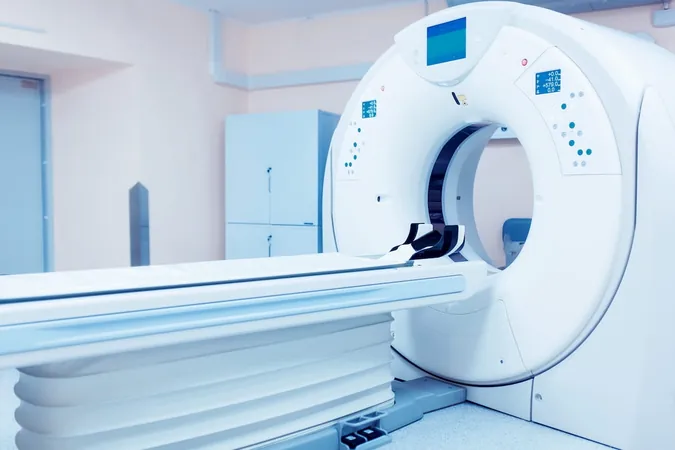
Shocking Findings: CT Scans Linked to 5% of New Cancer Cases!
2025-04-18
Author: John Tan
CT Scans and Cancer Risk: What You Need to Know
A groundbreaking study has revealed that radiation from CT scans could account for 5% of all new cancer diagnoses each year. Conducted by experts at UCSF and published in JAMA Internal Medicine, this research highlights the urgent need to re-evaluate current imaging practices.
1. A Staggering Projection
The study projects that in 2023 alone, approximately 103,000 future cancers will be linked to CT scans among 62 million patients. This alarming statistic translates to a projected incidence of 0.0017 for future radiation-induced cancers due to these scans.
2. Comparing Cancer Contributors
In perspective, while CT scans may be responsible for 5% of cancers, other risk factors like excess body weight and alcohol intake contribute to 7.6% and 5.4% respectively. This comparison raises questions about how imaging practices are contributing to cancer risk.
3. A Surge in CT Scans
Data from 2007 to 2023 shows a dramatic 25% increase in annual CT scans, jumping from 68.7 million to an alarming 93 million. This upward trend in scans is concerning given the associated cancer risks.
4. Children at High Risk
The study reveals that head CT scans alone could lead to 5,100 cases—53%—of future radiation-induced cancers in children. This vital finding emphasizes the need for alternative imaging strategies for younger patients.
5. The Impact of Abdominal CT Scans
Abdominal and pelvic CT scans are anticipated to contribute to 37% of future radiation-induced cancer cases, amounting to approximately 37,500 instances. Such significant numbers pose critical questions about their usage.
6. Advances in Scanning Methodology
Interestingly, this study considers multiphase scanning, which is used in 28.5% of CT exams—data that was not factored into previous studies. Understanding this methodology is crucial to accurately assessing cancer risks.
7. Lung Cancer's Alarming Stats
Lung cancer is projected to be the most frequent radiation-induced cancer resulting from CT scans, accounting for 22,400 cases—over 21.7%—with a concerning 70% of these cases occurring in women.
8. Gender Disparities in Pediatric Dosing
Researchers found that boys aged 5-9 receive a staggering 29% higher radiation dose to the pancreas during CT exams compared to their female counterparts. These disparities highlight the urgent need for more tailored imaging protocols.
9. Aging and Cancer Risk
The study identifies that the highest number of projected future radiation-induced cancers (19,700 cases) are linked to CT scans performed in individuals during their sixties. This highlights both the cumulative risks associated with increased scan frequency and the implications for older adults.
Conclusion: A Call for Caution
With CT scans becoming more prevalent, this research serves as an important reminder of the potential cancer risks associated with radiation exposure. It prompts both healthcare providers and patients to carefully weigh the necessity of CT scans against their long-term health consequences.

 Brasil (PT)
 Canada (EN)
 Chile (ES)
 Česko (CS)
 대한민국 (KO)
 España (ES)
 France (FR)
 Hong Kong (EN)
 Italia (IT)
 日本 (JA)
 Magyarország (HU)
 Norge (NO)
 Polska (PL)
 Schweiz (DE)
 Singapore (EN)
 Sverige (SV)
 Suomi (FI)
 Türkiye (TR)
 الإمارات العربية المتحدة (AR)