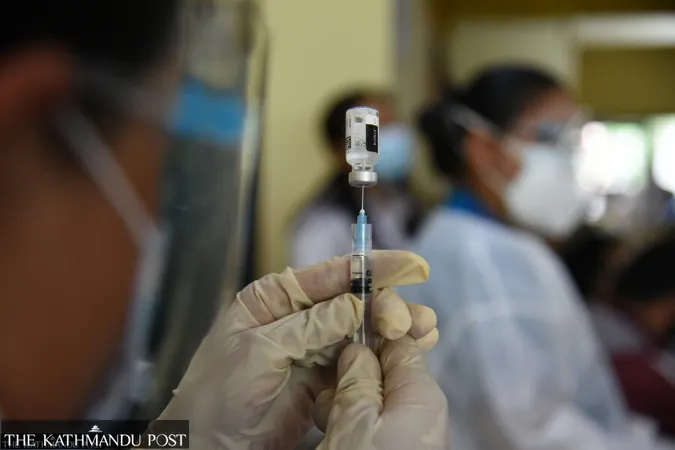
Shocking Hospital Practices in Kathmandu: A Serious Public Health Threat!
2025-04-21
Author: Jia
Major Health Hazards: Hospitals Ignoring Waste Management
KATHMANDU – A recent inspection by the Kathmandu Metropolitan City’s environment department has revealed a disturbing trend: several private hospitals in Kathmandu Valley are neglecting proper sterilization of used syringe needles and hazardous medical waste. This negligence poses significant health risks to the public.
Autoclaving—the essential steam sterilization process used to disinfect medical equipment—is apparently being ignored. As Shristi Shrestha, an inspector at the department, revealed, ‘We have fined three private hospitals this fiscal year for not managing hazardous waste appropriately.’
Fines Imposed Amidst Warnings
The three hospitals caught in this scandal are Kalanki’s Nepal National Hospital and Teku’s Buddha Mai Hospital, each slapped with hefty fines of Rs100,000, while Everest Hospital in Baneshwar faced a Rs50,000 penalty.
Shrestha expressed frustration, stating, ‘Despite being warned and given clear instructions, these hospitals chose to ignore us—an irresponsible decision that endangers public health.’
Mixing Medical and Household Waste: A Recipe for Disaster
Experts highlight that improper waste management from hospitals and state-run facilities is a persistent problem. Many institutions are blending hazardous medical waste with regular household garbage, a practice that heightens the risk of infectious disease outbreaks, including HIV, Hepatitis B, tuberculosis, and even COVID-19.
Both municipal cleaning staff and ragpickers are at risk, often facing injuries or infections from exposed needles. ‘Some hospitals lack autoclave machines, while others are not equipping staff with adequate protective gear for waste handling,’ noted Shrestha.
A Risky Environment: Unregulated Clinics and Facilities
In Kathmandu alone, there are over 2,100 health facilities, many of which operate without valid licenses. Officials indicate that the majority of private health facilities are improperly disposing of hazardous medical waste, with some even burning it in open areas—an environmentally hazardous practice.
Experts warn that burning medical waste can release deadly chemicals such as dioxins, which are known carcinogens. Pathological waste teems with harmful microorganisms that can quickly spread and infect the community if not handled correctly.
A Disturbing Report: Lack of Compliance and Awareness
A 2020 report by the Ministry of Health and Population showed alarming waste management practices among private hospitals, revealing that only 7.7% adhered to safe disinfection and recycling methods. In stark contrast, 19.2% resorted to burning immunization waste, while 15.4% mixed it with general municipal waste.
As the public becomes more aware of these egregious practices, the call for stricter regulations and compliance within Kathmandu’s health facilities grows louder. Hospitals must prioritize responsible waste management to protect not only their staff and patients but also the broader community.
The Need for Action: A Call for Change
In conclusion, the situation demands urgent intervention from health authorities and policymakers to ensure that hospitals are held accountable for their waste management practices. Only then can we hope to safeguard public health in Kathmandu and beyond.
 Brasil (PT)
 Canada (EN)
 Chile (ES)
 Česko (CS)
 대한민국 (KO)
 España (ES)
 France (FR)
 Hong Kong (EN)
 Italia (IT)
 日本 (JA)
 Magyarország (HU)
 Norge (NO)
 Polska (PL)
 Schweiz (DE)
 Singapore (EN)
 Sverige (SV)
 Suomi (FI)
 Türkiye (TR)
 الإمارات العربية المتحدة (AR)