Stunning New Hubble Image Reveals the Vibrant Beauty of the Eagle Nebula
2025-04-21
Author: Mei
A Breathtaking Cosmic Masterpiece
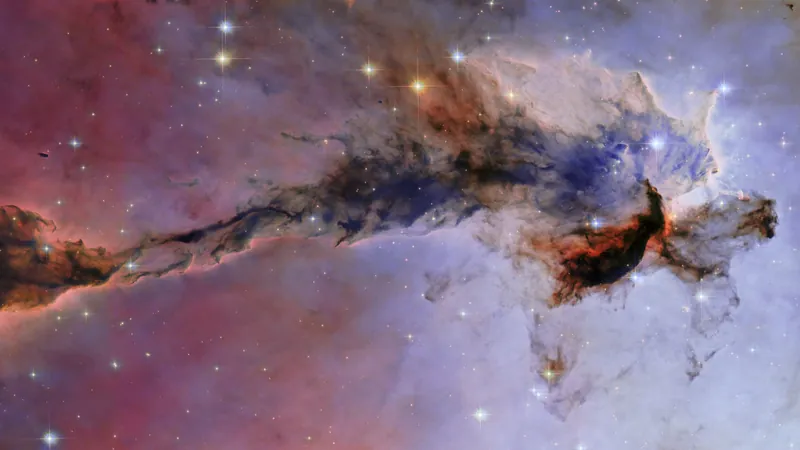
Prepare to be amazed! The latest image from the Hubble Space Telescope provides a mesmerizing view of the Eagle Nebula, showcasing a towering pillar of gas and dust, dramatically shaped by fierce stellar radiation.
The Stellar Nursery of the Universe
Located a staggering 6,500 light-years away in the constellation Serpens, the Eagle Nebula, also known as Messier 16, is famous as a stellar nursery where new stars are born from vast clouds of cosmic dust and gas. This region is a cradle of creation, teeming with cosmic wonders.
The Pillars of Creation Revisited
You may recognize the Eagle Nebula from the iconic "Pillars of Creation" image captured by Hubble in 1995. Now, a fresh perspective reveals a lesser-known yet striking pillar within this majestic nebula, bursting with intricate textures molded by the ultraviolet radiation emitted from newborn stars, as reported by the European Space Agency (ESA).
Unveiling the Cosmic Sculpture
"Stretching an astonishing 9.5 light-years tall, this pillar of cold gas and dust is a mere fragment of the grand scale of the Eagle Nebula," ESA officials stated. The image brilliantly illustrates how intense radiation influences the surrounding gas and dust, sculpting them into dramatic formations.
Celebrating Hubble's Legacy
This spectacular observation was made possible through advanced data processing techniques that have emerged since Hubble last surveyed this area in 2005. In celebration of Hubble's impending 35th anniversary, astronomers are revisiting awe-inspiring targets like the Eagle Nebula to showcase the telescope's enduring legacy.
The Eagle Emerges from the Dust
The Eagle Nebula's striking shape is reminiscent of a bird in flight, thanks to its dense gas and dust clouds. While a cluster of young stars lies just outside the image's frame, their influence is profound, shaping the cosmic landscape around them. Denser regions of gas are resilient against radiation and stellar winds, allowing them to persist as these breathtaking dusty sculptures.

 Brasil (PT)
 Canada (EN)
 Chile (ES)
 Česko (CS)
 대한민국 (KO)
 España (ES)
 France (FR)
 Hong Kong (EN)
 Italia (IT)
 日本 (JA)
 Magyarország (HU)
 Norge (NO)
 Polska (PL)
 Schweiz (DE)
 Singapore (EN)
 Sverige (SV)
 Suomi (FI)
 Türkiye (TR)
 الإمارات العربية المتحدة (AR)