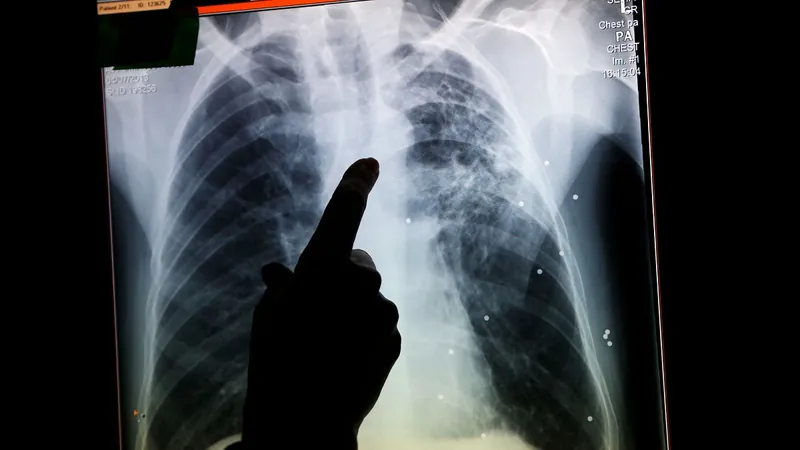
TB: The Resurgent Killer in the UK – What You Need to Know
2025-04-20
Author: Daniel
In a shocking twist of fate, Anja Madhvani found herself battling tuberculosis (TB) in the middle of a Moroccan desert while running an ultramarathon. From feverish nights to coughing up blood, her ordeal led to a terrifying realization: she was gripped by one of the world's deadliest diseases.
Upon returning to the UK, what she thought was a simple flu spiraled into a year-long struggle against TB, leaving her more than just physically drained. This case is a grim reminder of the disease's resurgence, raising alarm bells across the UK.
A Deadly Relic of the Past?
Often dismissed as a relic of the 19th century, TB is not only still alive but thriving, claiming about 1.25 million lives worldwide in 2023 alone. Although it predominantly impacts impoverished regions, countries like the UK are witnessing a perplexing resurgence.
TB on the Rise: The Alarming Statistics
Recent data reveals a staggering 13% increase in TB cases across England since 2023, marking the largest jump since 1971. In East London, clinics are drowning in patients, compelling the opening of a new £4.63 million center, illustrating the severity of this neglected crisis.
Who’s Most Affected?
Traditionally linked to poverty, TB is re-emerging among diverse groups, including long-term UK residents, a trend that contradicts years of decreasing infection rates. The increase may be partly due to pandemic-related disruptions in healthcare, allowing dormant infections to surface.
Social Factors at Play
Factors like homelessness, overcrowding, and substance abuse elevate TB risks, but the true extent of social risks among patients might be underreported. Experts note that while only 13.1% of patients acknowledged such factors, many more may be living in similar conditions.
A Call for Action
Responding to this crisis, the UK Health Security Agency has proposed a new five-year action plan aimed at more efficient detection and treatment. However, questions remain about funding and the effectiveness of awareness campaigns in high-risk communities.
Mental Health Matters
Post-treatment support for TB patients like Madhvani is alarmingly inadequate, leaving many to cope with the long-lasting effects of the disease, both physically and mentally. As she points out, the fear and isolation experienced during treatment often go unrecognized.
Drug Resistance: A Growing Concern
Luckily, most UK patients are not dealing with drug-resistant strains of TB, a significant challenge for many countries. Ensuring early detection and treatment remains critical for curbing this issue.
The Hidden Dangers of TB
Madhvani's case illustrates the hidden dangers of TB transmission, as she unknowingly infected others before her diagnosis. Despite the grim toll, her story serves as a powerful reminder that TB can affect anyone, regardless of wealth or background.
Conclusion: A Collective Responsibility
As TB cases rise in the UK, it is crucial for individuals to recognize the risks and seek immediate medical attention for symptoms. Awareness and timely intervention can save lives and curb this public health crisis.
 Brasil (PT)
 Canada (EN)
 Chile (ES)
 Česko (CS)
 대한민국 (KO)
 España (ES)
 France (FR)
 Hong Kong (EN)
 Italia (IT)
 日本 (JA)
 Magyarország (HU)
 Norge (NO)
 Polska (PL)
 Schweiz (DE)
 Singapore (EN)
 Sverige (SV)
 Suomi (FI)
 Türkiye (TR)
 الإمارات العربية المتحدة (AR)