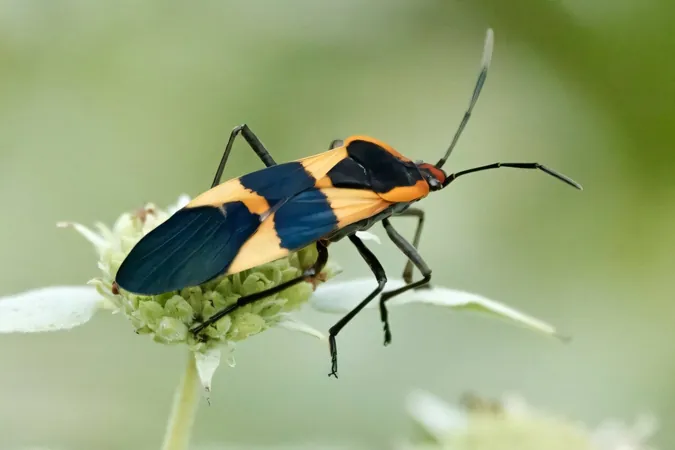
The Shocking Truth: Insects Face Mass Extinction Due to Agriculture and Hidden Threats!
2025-04-22
Author: Daniel
Insects on the Brink: What's Happening?
Insects are vanishing at an unprecedented pace across the globe, and the clock is ticking! New research from Binghamton University sheds light on the multifaceted reasons behind this alarming phenomenon, with agricultural practices taking the lead, but that’s just the tip of the iceberg.
A Deep Dive into Research
The panic began with a groundbreaking study in 2017 that revealed a staggering 75% drop in insect populations over just 30 years. Since then, scientists have ramped up their investigations, publishing numerous papers trying to unravel the mystery behind this crisis. To paint a clearer picture, the Binghamton University team scrutinized over 175 scientific reviews, examining over 500 hypotheses related to insect decline.
Building a Web of Causes
Using their findings, researchers constructed a complex web of 3,000 potential connections linking the many factors contributing to insect decline. Christopher Halsch, the study's lead author, explained, "Instead of gathering hundreds of opinions, we analyzed existing literature to uncover causal pathways, like how agriculture leads to pollution, which then influences insect populations."
Agriculture: The Leading Villain
Unsurprisingly, the primary culprit identified was agricultural intensification, encompassing practices like land-use changes and the use of harmful insecticides. However, the issue isn’t as simple as it seems; it’s a tangled web where climate change and extreme weather events also play significant roles.
Under-reported Threats
Despite extensive research, many potential threats to insects remain woefully understudied. For instance, natural disasters, human activities, and even war were glaringly absent from recent literature. Eliza Grames, an assistant professor, voiced concerns about this oversight, highlighting that significant threats to biodiversity could be overlooked simply because they've been underestimated in research.
The Bias Toward Bees and Butterflies
The study revealed a troubling bias in conservation efforts, predominantly favoring “popular” insects like bees and butterflies over the vast majority of insect species. This narrow focus could hinder conservation strategies for other crucial insects.
A Call for Comprehensive Conservation Strategies
Researchers warn that conservation efforts must embrace a broader perspective rather than concentrating solely on certain species or stressors. Halsch cautioned, "If we prioritize conservation for just bees and butterflies, we risk neglecting the wider world of insects, many of which are just as important."
In Conclusion: A Need for Change
The findings underscore the urgent need for a comprehensive and inclusive approach to insect conservation. By broadening the scope of research and conservation strategies, we can hopefully stem the tide of this looming insect apocalypse. The time to act is now!

 Brasil (PT)
 Canada (EN)
 Chile (ES)
 Česko (CS)
 대한민국 (KO)
 España (ES)
 France (FR)
 Hong Kong (EN)
 Italia (IT)
 日本 (JA)
 Magyarország (HU)
 Norge (NO)
 Polska (PL)
 Schweiz (DE)
 Singapore (EN)
 Sverige (SV)
 Suomi (FI)
 Türkiye (TR)
 الإمارات العربية المتحدة (AR)