Unearthing History: The Discovery of an Ancient Hell Ant from 113 Million Years Ago in Brazil!
2025-04-24
Author: Ming
A Remarkable Find in Brazilian Limestone
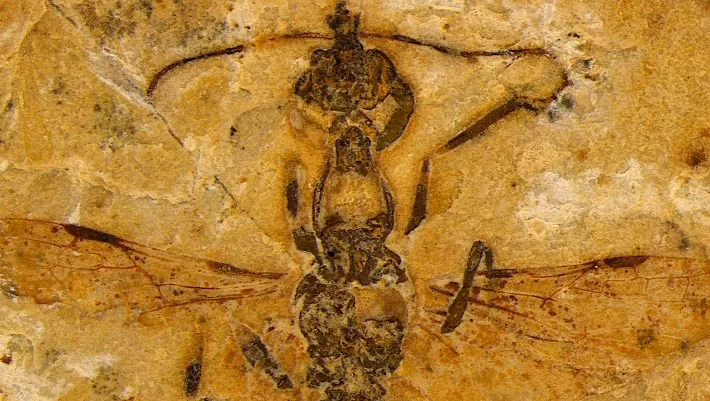
Paleontologists have unveiled a stunning discovery: the oldest known member of the Haidomyrmecinae, an extinct subfamily of ants that thrived during the Cretaceous period, has been found beautifully preserved as a rock impression in northeastern Brazil's Crato Formation.
Meet Vulcanidris cratensis!
Named Vulcanidris cratensis, this extraordinary new species roamed the Earth an astonishing 113 million years ago during the Early Cretaceous epoch. Not only does it represent the oldest definitive ant known to science, but it also provides the most comprehensive evidence regarding the early evolution of ants in the fossil record.
Unlocking Ancient Mysteries
Dr. Anderson Lepeco, a leading paleontologist from the Museu de Zoologia da Universidade de São Paulo, emphasizes the significance of this find: "Vulcanidris cratensis showcases the earliest undeniable geological record of ants. This discovery is especially exciting as it belongs to the extinct 'hell ant', known for its bizarre predatory adaptations."
Ants: A Global Legacy
Unlike previous findings of ancient ants preserved in amber, this limestone fossil highlights that hell ants had already begun to diversify and spread across the globe during their evolutionary journey.
A Fossil to Remember
Dr. Lepeco and his team stumbled upon this remarkably preserved specimen while examining one of the largest fossil insect collections from the Crato Formation, renowned for its impeccable fossil preservation. "When we encountered this extraordinary specimen, we recognized its immense significance not just as a new species but as potential definitive evidence of ants in the Crato Formation," he remarked.
Intriguing Adaptations of a Hunter
Using cutting-edge micro-computed tomography imaging, researchers discovered that Vulcanidris cratensis shares characteristics with hell ants solely known from Burmese amber specimens. This finding implies that these insects had their own unique predatory strategies that significantly differ from modern ants.
A Paradigm Shift in Ant Evolution
What took the researchers by surprise were the specialized features of its feeding apparatus. Instead of the laterally moving mandibles typical of modern ants, this ancient species featured mandibles extending forward, parallel to the head, challenging previous assumptions about the pace of evolutionary adaptations.
Unraveling Evolutionary Pressures
The discovery of Vulcanidris cratensis raises crucial questions about the evolutionary pressures that shaped the hell ant's distinctive adaptations. With advancements in imaging technology, the examination of such fossil specimens will yield even greater insights into the past.
Published Findings
This groundbreaking discovery is detailed in a paper released in the journal Current Biology, shining a spotlight on Brazilian paleontology and the rich, yet underexplored, fossil insect fauna of the country.
 Brasil (PT)
 Canada (EN)
 Chile (ES)
 Česko (CS)
 대한민국 (KO)
 España (ES)
 France (FR)
 Hong Kong (EN)
 Italia (IT)
 日本 (JA)
 Magyarország (HU)
 Norge (NO)
 Polska (PL)
 Schweiz (DE)
 Singapore (EN)
 Sverige (SV)
 Suomi (FI)
 Türkiye (TR)
 الإمارات العربية المتحدة (AR)