Unleashing TerraMind: The AI Revolutionizing Earth Observation
2025-04-22
Author: Arjun
IBM Partners with ESA to Combat Climate Change
In a groundbreaking collaboration, IBM Corp. has joined forces with the European Space Agency (ESA) to introduce TerraMind, an innovative artificial intelligence system designed to monitor climate change and global crises like water scarcity in real-time using advanced space data.
Meet TerraMind: A Game-Changer in Earth Observation
IBM claims that TerraMind is the most sophisticated Earth observation model to date, now accessible to researchers through the Hugging Face platform. This open-source marvel was crafted from the extensive TerraMesh dataset, encompassing the largest collection of freely available geospatial information gathered by experts involved in the project.
A Multimodal Marvel for Accurate Predictions
What sets TerraMind apart is its cutting-edge multimodal approach. Utilizing a unique 'symmetric transformer-based encoder-decoder architecture,' the model seamlessly integrates data from various sources, processing pixel-based, token-based, and sequence-based inputs. Surprisingly lightweight, TerraMind operates with about ten times fewer resources than conventional models in its class, leading to a more cost-effective solution.
The Power of Nine Data Modalities
With its sophisticated design, TerraMind evaluates multiple factors impacting climate change, effectively predicting water scarcity risks. It factors in climate, temperature, rainfall, land use, vegetation, and agricultural practices—all within one comprehensive model. This revolutionary capability marks a significant shift from traditional methods which required numerous models to assess individual variables.
Performance and Precision: TerraMind Stands Out
According to independent evaluations by ESA, TerraMind outperformed 12 other models tested on the PANGEA benchmark, excelling by at least 8% across various ecological tasks, from land cover classification to environmental monitoring. Simonetta Cheli, ESA's Earth Observation Programmes Director, emphasized that the integration of diverse data modalities allows for deeper insights, unlocking the full potential of ESA's data.
Innovative Techniques for Enhanced Accuracy
TerraMind also introduces a novel technique known as 'Thinking-in-Modalities' (TiM), which enhances its predictive power by generating synthetic training data from various inputs. This breakthrough method allows the model to create detailed maps while addressing specific environmental challenges, further refining its accuracy for specialized applications.
Applications: From Long-Term Planning to Immediate Response
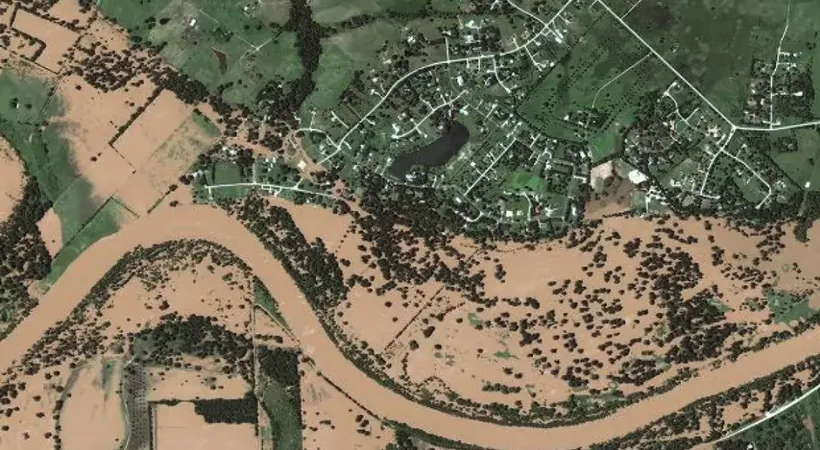
The potential applications of TerraMind are vast, ranging from natural disaster management and urban planning to precision agriculture and biodiversity monitoring. It promises to address both long-term environmental concerns and immediate crises like flood and wildfire monitoring.
The Future of Earth Observation is Here
As technology advances, AI's role in understanding our planet will become increasingly critical. Holger Mueller from Constellation Research Inc. highlights that models like TerraMind can transform our capabilities in predicting and simulating both natural and human-induced events. With its open-source release already underway, IBM aims to further refine TerraMind for high-impact use cases.
A Collaborative Triumph for Earth Sciences
Nicolas Longepe, an ESA Earth Observation Data Scientist, underscored the partnership's aim to exploit space-based data to protect our planet, stating that this initiative exemplifies the power of collaboration among scientists, tech companies, and data experts. The synthesis of knowledge is where the true magic happens.
 Brasil (PT)
 Canada (EN)
 Chile (ES)
 Česko (CS)
 대한민국 (KO)
 España (ES)
 France (FR)
 Hong Kong (EN)
 Italia (IT)
 日本 (JA)
 Magyarország (HU)
 Norge (NO)
 Polska (PL)
 Schweiz (DE)
 Singapore (EN)
 Sverige (SV)
 Suomi (FI)
 Türkiye (TR)
 الإمارات العربية المتحدة (AR)