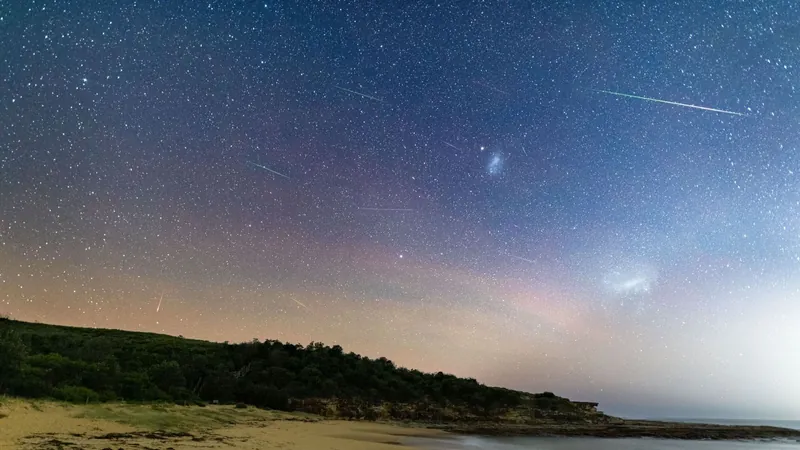
Unlock the Magic of the Eta Aquariid Meteor Shower: A Celestial Event You Can't Miss!
2025-04-20
Author: Siti
Prepare for a Cosmic Spectacle!
Get ready to gaze at the night sky as Earth glides through the remnants of Halley’s Comet, lighting up our atmosphere with a breathtaking meteor shower—the Eta Aquariids! For over a month, this astronomical show offers a dazzling display of shooting stars that beckon stargazers everywhere.
What Exactly Are the Eta Aquariids?
The Eta Aquariid meteor shower occurs when our planet intersects the trails of cosmic dust left behind by the legendary Halley’s Comet. While the comet itself won’t stretch across our skies again until 2061, its debris transforms each spring into an awe-inspiring spectacle. The radiant point of this enchanting shower is located near the Eta Aquarii star in the Aquarius constellation, but fear not—shooting stars can illuminate any part of the sky!
Mark Your Calendars: Optimal Viewing Time!
Unlike other fleeting meteor showers, the Eta Aquariids grace the heavens from April 19 to May 28, but the peak? It shines on May 4! With minimal moon light pollution in May 2025, the conditions are set for skywatching perfection. Early risers or night owls will reap the rewards—so set that alarm or keep the coffee flowing!
Top Spots for Meteor Watching!
Southern Hemisphere stargazers have the most to cheer about! With the radiant point higher in the sky, viewers can catch up to 30 meteors an hour, and possibly even 50 under perfect conditions. But don't count out the Northern Hemisphere—up to 20 meteors per hour can still be spotted, making it an exciting night for all!
How to Make the Most of Your Viewing Experience!
To witness this celestial marvel, seek out a spot free from city lights. Bring a cozy blanket or a reclining chair, lying back with feet aimed east. It takes about 30 minutes for your eyes to fully adjust to the darkness, so arrive early—around 2:00 a.m. local time is ideal.
Though the meteors originate from the Aquarius constellation, they will streak across all corners of the sky—making sure you don’t need to focus solely on the radiant point. And get ready to be amazed! Traveling at approximately 40.7 miles per second, the Eta Aquariids are among the fastest meteors, so patience is key.
Embrace the Wonder!
The Eta Aquariid meteor shower offers a stunning spectacle that can be enjoyed with the naked eye—no telescopes or binoculars required. Just a sprinkle of patience and a sense of awe will enhance your experience. Whether in the Southern or Northern Hemisphere, prepare for an unforgettable night under the stars! Take these tips, aim for clear skies, and enjoy this extraordinary cosmic ballet.

 Brasil (PT)
 Canada (EN)
 Chile (ES)
 Česko (CS)
 대한민국 (KO)
 España (ES)
 France (FR)
 Hong Kong (EN)
 Italia (IT)
 日本 (JA)
 Magyarország (HU)
 Norge (NO)
 Polska (PL)
 Schweiz (DE)
 Singapore (EN)
 Sverige (SV)
 Suomi (FI)
 Türkiye (TR)
 الإمارات العربية المتحدة (AR)