Unlocking Cancer Care: The Hidden Heroes of Rural India
2025-04-24
Author: Yu
An Escalating Cancer Crisis in Rural India
Cancer is fast becoming a serious public health concern in India, with estimates reaching 1.41 million new cases in 2020 alone, and projections indicate this number will soar in the years to come. Rural regions are particularly hard-hit, suffering from greater challenges in healthcare access compared to urban areas, resulting in poorer outcomes and survival rates.
The Role of Community Health Workers (CHWs)
In the fight against cancer in rural India, Community Health Workers (CHWs) play a crucial role as the frontline defenders. These dedicated individuals—such as Accredited Social Health Activists (ASHAs) and Village Health Nurses (VHNs)—bridge the gap between local communities and healthcare systems. They engage in vital activities, including awareness campaigns, early detection, and referrals for further treatment. However, their efforts are often hindered by inadequate training and resources, which can lead to burnout and lower effectiveness.
Barriers to Cancer Care: A Deep Dive
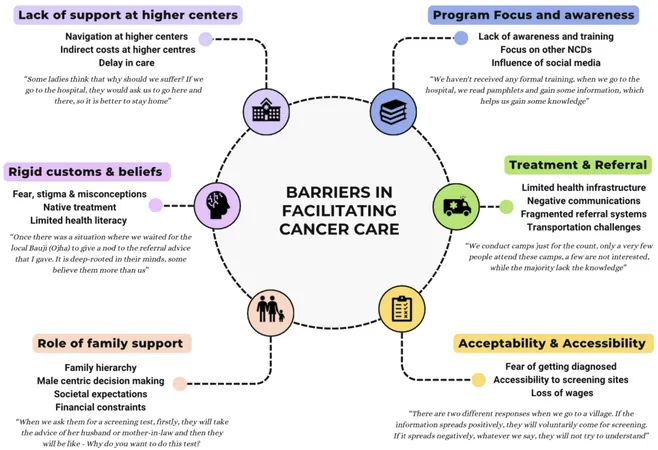
Despite the efforts of CHWs, numerous barriers impede the path to cancer care. These include: 1. **Lack of Awareness and Training:** Many CHWs have limited knowledge about cancer signs and screening processes, particularly in states where cancer screening initiatives are sparse. 2. **Infrastructure Challenges:** Rural healthcare facilities often lack the necessary equipment and privacy for cancer screening, leading to skepticism towards the health system. 3. **Sociocultural Hurdles:** Fear of a cancer diagnosis and social stigma surrounding the disease deter many from seeking care. 4. **Transportation Difficulties:** Poor infrastructure makes it challenging for patients to reach treatment centers, particularly in remote areas.
Success Stories and Community Engagement
In states like Tamil Nadu, where organized cancer screening programs exist, CHWs have been pivotal in improving cancer detection rates. Their efforts are complemented by a robust community network that enhances public awareness and trust, leading to higher screening participation. Contrastingly, in Rajasthan, the lack of such structured programs leaves CHWs with insufficient tools and information.
The Road Ahead: Recommendations for Improvement
To improve cancer care in rural India, several steps need to be taken: - **Enhanced Training for CHWs:** Develop ongoing training programs focused not only on screening techniques but also on building communication and cultural competence. - **Invest in Healthcare Infrastructure:** Strengthen local healthcare facilities to better support cancer detection and treatment. - **Community Engagement Initiatives:** Foster partnerships with local leaders and organizations to normalize cancer screenings and reduce stigma.
Conclusion: Addressing the Fight Against Cancer Together
The battle against cancer in rural India is multifaceted, requiring a concerted effort from policymakers, healthcare providers, and communities. By empowering Community Health Workers and addressing the myriad of barriers they face, India can move closer to a future where cancer care is accessible and effective for all.


 Brasil (PT)
 Canada (EN)
 Chile (ES)
 Česko (CS)
 대한민국 (KO)
 España (ES)
 France (FR)
 Hong Kong (EN)
 Italia (IT)
 日本 (JA)
 Magyarország (HU)
 Norge (NO)
 Polska (PL)
 Schweiz (DE)
 Singapore (EN)
 Sverige (SV)
 Suomi (FI)
 Türkiye (TR)
 الإمارات العربية المتحدة (AR)