Unlocking Longevity: How the Triglyceride-Glucose Index Could Predict Death Risks in Chinese Centenarians
2025-04-23
Author: Li
Exploring the Link Between Triglycerides and Longevity
Recent research has uncovered a startling connection between the triglyceride-glucose (TyG) index, its relationship with body mass index (TyG-BMI), and all-cause mortality among Chinese centenarians. As science races to understand the secrets of longevity, this groundbreaking study shines a light on how these metabolic markers may hold the key to living longer.
The Study Breakdown: Who, What, and How?
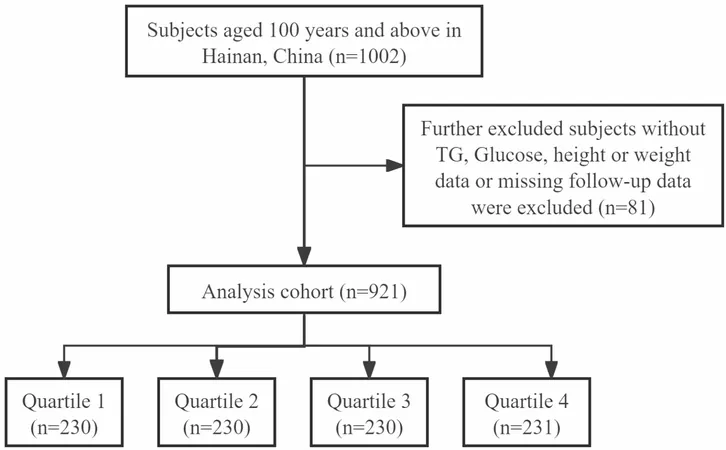
Conducted through the China Hainan Centenarian Cohort Study (CHCCS), this extensive investigation analyzed data from 921 centenarians who were followed for nearly 30 months. The participants were categorized into quartiles based on their TyG and TyG-BMI indices, and survival times were compared using statistical analyses.
Jaw-Dropping Findings on Mortality Risks
In a shocking twist, the study revealed that those in the lowest quartiles of TyG and TyG-BMI faced a significantly higher risk of death compared to their highest quartile counterparts. Specifically, the risk of death was 1.27 times higher for low TyG and 1.60 times greater for low TyG-BMI participants. Notably, lower indicators were linearly associated with increased mortality, indicating these measures could serve as vital prognostic tools.
Insulin Resistance: A Hidden Culprit?
Insulin resistance (IR) is typically linked to various health issues, including metabolic syndrome and cardiovascular diseases. The TyG index is celebrated for being a straightforward indicator of IR. This study suggests that fostering low insulin resistance may actually contribute to longevity, with centenarians often showing remarkably low prevalence rates of conditions like diabetes.
Unique Insights from the Centenarian Cohort
This study not only revealed that centenarians generally demonstrated low insulin resistance, but also highlighted the unique metabolic characteristics of this age group. Reports indicated that while insulin sensitivity typically declines with age, many centenarians maintain healthy levels of glucose tolerance.
Why TyG-BMI Might Be Your Secret Weapon for Longevity
The study made a compelling case that TyG-BMI is even more predictive of mortality risk than the TyG index alone. By combining lipid, glucose, and obesity parameters, the TyG-BMI offers a comprehensive picture of health. It appears that in centenarians, a higher body mass index can symbolize greater physiological reserves, acting as a protective factor against the stressors of life.
Influence of Blood Pressure: A Complicating Factor?
Intriguingly, researchers found that blood pressure levels could impact the relationship between TyG-BMI and mortality. Normal blood pressure seems to fortify the link between these indices and longevity, suggesting a complex interplay in the body's aging response.
Conclusions: A Bright Light on the Road to Longevity
In a world increasingly fascinated by the science of aging, this study illuminates the importance of metabolic health as a predictor of longevity. The findings suggest that lower TyG and TyG-BMI indices correlate with higher all-cause mortality, thus showcasing the significance of maintaining healthy triglyceride and glucose levels.
As researchers continue to unravel the mysteries of aging, this pivotal study could pave the way for further inquiries into preventive strategies that could enhance longevity and the quality of life among aging populations.
Next Steps in Research
While this research specifically focuses on centenarians in Hainan, the implications are universal. Future studies could expand on these findings across various demographics and geographic locations, exploring the intricate relationships between metabolic indicators and aging globally.
 Brasil (PT)
 Canada (EN)
 Chile (ES)
 Česko (CS)
 대한민국 (KO)
 España (ES)
 France (FR)
 Hong Kong (EN)
 Italia (IT)
 日本 (JA)
 Magyarország (HU)
 Norge (NO)
 Polska (PL)
 Schweiz (DE)
 Singapore (EN)
 Sverige (SV)
 Suomi (FI)
 Türkiye (TR)
 الإمارات العربية المتحدة (AR)