Unlocking the Mystery: How Growing Up as an Only Child Alters the Brain and Behavior
2025-04-21
Author: Nur
The Rise of Only Children: What Does It Mean?
As family sizes shrink across the globe, more parents find themselves raising an only child, either by choice or circumstance. This trend raises a critical question: how does growing up without siblings affect an individual's brain and behavior as they transition into adulthood?
Diving Deep into an Intriguing Debate
While a range of psychological studies have explored the implications of having siblings versus being an only child, the results remain intriguing but contradictory. Some research flags potential downsides for only children, while others shine a spotlight on their impressive achievements and social skills. The inconsistency of these findings leaves room for deeper exploration.
A Groundbreaking Study by Chinese Researchers
In a recent study led by experts from Tianjin Medical University General Hospital, researchers sought to clarify how growing up without siblings shapes adults' brains and behaviors. The groundbreaking findings, published in _Nature Human Behaviour_, reveal distinct brain patterns and behavioral traits common among those who grew up as only children.
"With an increasing trend of only-child families worldwide, understanding the implications on brain development and behavior is essential," stated Jie Tang, Jing Zhang, and their team in their research.
The CHIMGEN Study: A Close Look at Brain Development
This comprehensive study analyzed data from the Chinese Imaging Genetics (CHIMGEN) project, gathering insights from 2,397 individuals paired up based on demographics—one only child and one with siblings. By scrutinizing both groups, researchers aimed to unearth the complex impacts of sibling dynamics.
Revealing the Impact of an Only-Child Environment
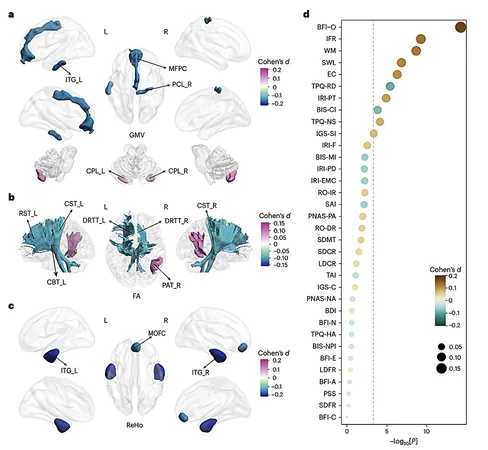
The findings were eye-opening! Only children displayed notable differences in brain structure and activity, such as integrity of white matter, brain volume, and even aspects related to memory and mental health. The study also identified unique behavioral patterns, debunking stereotypes that only children are more prone to problematic behaviors.
"While we initially expected to find negative associations with growing up without siblings, our results suggested otherwise, linking this experience to better cognitive abilities and mental health," the researchers reported.
Implications for the Future: Nurturing Healthy Development
So, what does this all mean? The study indicates that while being an only child has direct influences on brain and behavioral outcomes, these effects are largely shaped by environmental factors such as socioeconomic status and parental care. This opens the door for targeted interventions that enhance growth experiences for only children, potentially leading to improved cognitive and emotional health in adulthood.
By shedding light on the intricate relationship between sibling dynamics and developmental outcomes, this research encourages a shift in how we nurture only children. With thoughtful strategies in place, we can empower them to thrive.
 Brasil (PT)
 Canada (EN)
 Chile (ES)
 Česko (CS)
 대한민국 (KO)
 España (ES)
 France (FR)
 Hong Kong (EN)
 Italia (IT)
 日本 (JA)
 Magyarország (HU)
 Norge (NO)
 Polska (PL)
 Schweiz (DE)
 Singapore (EN)
 Sverige (SV)
 Suomi (FI)
 Türkiye (TR)
 الإمارات العربية المتحدة (AR)