Unlocking the Secrets of Achondroplasia: New Insights and Revolutionary Treatments
2025-04-20
Author: Jia
Breakthrough Research Unveils Cellular Mechanisms of Achondroplasia
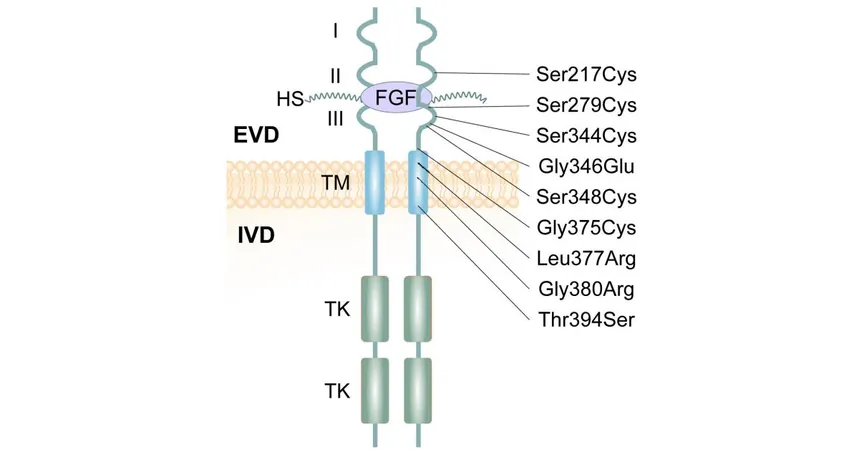
A groundbreaking study published in *Genes & Diseases* has illuminated the cellular processes behind achondroplasia, the most prevalent form of genetic dwarfism. This disorder primarily originates from gain-of-function mutations in the fibroblast growth factor receptor 3 (FGFR3) gene, which profoundly affects skeletal growth.
The Role of FGFR3 in Growth Disruption
At the heart of achondroplasia is the hyperactivation of FGFR3, a factor that hampers long bone development and interferes with cranial, spinal, and vertebral structuring. The study reveals how FGFR3 signaling represses crucial pathways like Indian hedgehog (IHH) and parathyroid hormone-related protein (PTHrP), leading to abnormal cell growth and skeletal formation.
Implications for Bone Development and Cartilage Formation
Further investigating FGFR3's influence, researchers have noted its role in osteogenesis, affecting not just chondrocytes but also osteoblast differentiation and bone mineralization. FGFR3-positive cells play a vital role in forming essential structures like articular cartilage and intervertebral discs, which has exciting implications for skeletal stem cell biology.
A New Era of Treatment Options
On the treatment frontier, a diverse array of strategies is emerging. Innovative therapies aiming to inhibit FGFR3 include monoclonal antibodies, decoy receptors such as recifercept, and small molecule inhibitors like infigratinib. These treatments are designed to target different levels of the FGFR3 pathway, with additional approaches like RNA aptamers and compounds like vosoritide enhancing chondrocyte proliferation and bone growth.
Surgical and Hormonal Interventions Still Viable
While surgical options like limb lengthening provide possible relief, they carry considerable risks. Recombinant human growth hormone (rhGH) therapy has shown moderate success, especially when used alongside other treatments. Exciting future possibilities may include CRISPR-Cas9 gene editing to correct FGFR3 mutations and stem cell therapies for regeneration.
A Glimpse into Future Research
This research represents a pivotal moment in our understanding of achondroplasia and opens doors for new clinical applications. As scientists continue to unravel the complexities of this condition, the hope is to improve the quality of life for those affected by genetic dwarfism.
 Brasil (PT)
 Canada (EN)
 Chile (ES)
 Česko (CS)
 대한민국 (KO)
 España (ES)
 France (FR)
 Hong Kong (EN)
 Italia (IT)
 日本 (JA)
 Magyarország (HU)
 Norge (NO)
 Polska (PL)
 Schweiz (DE)
 Singapore (EN)
 Sverige (SV)
 Suomi (FI)
 Türkiye (TR)
 الإمارات العربية المتحدة (AR)