Unlocking the Secrets of Lynch Syndrome: A Game Changer in Colon Cancer Prevention
2025-04-17
Author: Nur
What You Need to Know About Lynch Syndrome
Lynch Syndrome might not be a household name, but it affects nearly one million Americans, dramatically heightening their risk of various cancers, including colon cancer. Disturbingly, half of those with Lynch Syndrome remain unaware of their condition. Early and regular screenings can lead to earlier detections, making treatment more effective and potentially saving lives.
Groundbreaking Columbia University Findings
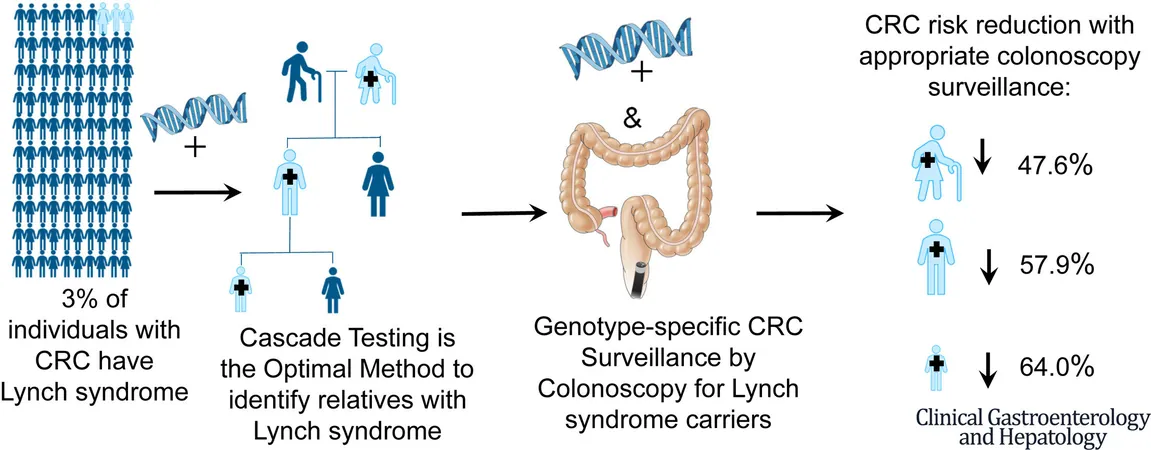
A recent study from Columbia University reveals that screening family members of colon cancer patients for Lynch Syndrome can significantly reduce cancer deaths. Published in the journal *Clinical Gastroenterology and Hepatology*, the research highlights that identifying Lynch Syndrome within this group can result in up to a staggering 79% reduction in colon cancer fatalities.
Lead researcher Dr. Sheila Rustgi states, "Our analysis underscores the critical need for heightened awareness and screening regarding Lynch Syndrome, particularly among patients and their first-degree relatives." The hope is that by illustrating the profound benefits, healthcare professionals will encourage more families to take proactive measures.
Connecting the Dots: Colon Cancer and Lynch Syndrome
Lynch Syndrome is responsible for about 5% of colon cancer cases. Unfortunately, as few individuals realize they have the syndrome during their colon cancer diagnosis, medical guidelines recommend that all newly diagnosed patients be screened. This not only influences treatment options but also aids in early detection of additional cancers, improving patient outcomes while reducing healthcare costs.
If a patient tests positive for Lynch Syndrome, immediate screening is advised for their first-degree relatives, who carry a 50% chance of having the syndrome. Alarmingly, only one-third of these relatives are informed about their risk, and even fewer end up getting screened.
The Study's Revelatory Approach
To measure the benefits of screening relatives, the Columbia research team utilized advanced simulation models, analyzing patient outcomes, cancer risks, and healthcare costs. They explored the impact of screening three generations: parents, siblings, and children of those recently diagnosed with Lynch-related colon cancer.
Key Discoveries and Benefits
The study confirmed that Lynch Syndrome screening is advantageous across all first-degree relatives, especially younger individuals. Dr. Rustgi emphasizes that while screening for colon cancer typically starts in one’s late 40s or early 50s, those with Lynch Syndrome could begin at 20, increasing the likelihood of catching pre-cancerous growths or early-stage cancers, which are highly treatable.
Even a modest increase in cascade testing—screening relatives—would lead to more lives saved. The researchers found that for every 25% rise in testing, they could expect a 20% drop in colon cancer deaths.
Additionally, this proactive testing would lower overall healthcare costs, as frequent screenings could be financially justified by the significant savings from reduced cancer treatment expenditures.
A Call to Action for Families and Health Providers
With so much at stake, the findings from Columbia University are a clarion call for families and healthcare providers alike. Early awareness and testing for Lynch Syndrome can significantly shift the landscape of colon cancer prevention, making it imperative for more people to get informed and screened.
 Brasil (PT)
 Canada (EN)
 Chile (ES)
 Česko (CS)
 대한민국 (KO)
 España (ES)
 France (FR)
 Hong Kong (EN)
 Italia (IT)
 日本 (JA)
 Magyarország (HU)
 Norge (NO)
 Polska (PL)
 Schweiz (DE)
 Singapore (EN)
 Sverige (SV)
 Suomi (FI)
 Türkiye (TR)
 الإمارات العربية المتحدة (AR)