Unlocking the Secrets of the Apple: New Study Reveals Evolutionary Journey of the Malus Genus
2025-04-24
Author: Wei Ling
The Apple Family Tree: A Journey Through Time
In an exciting new study, researchers have delved into the rich genetic tapestry of the Malus genus, which encompasses over 35 species of apples spread across the cooler regions of the northern hemisphere, spanning East Asia, Europe, and North America. This genus includes the well-known domesticated apple, Malus domestica, along with many of its wild relatives.
A Groundbreaking Genome Analysis
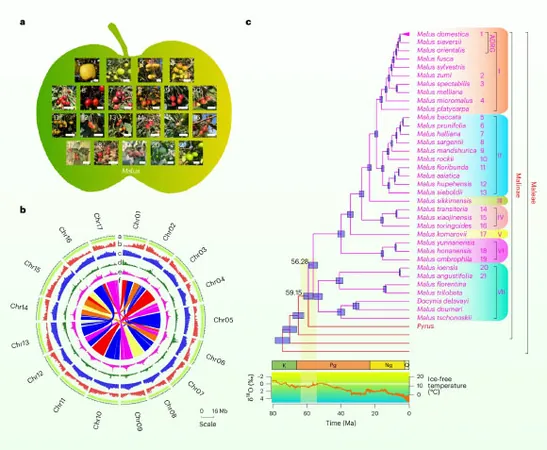
Led by Professor Hong Ma from Penn State, the research team made significant strides in understanding the evolution and genomic diversity of Malus. "Despite the apple’s massive importance as a fruit crop globally, the study of its evolutionary lineage had been lacking until now," Professor Ma stated. The scientists sequenced the genomes of 30 different Malus species, including the ever-popular golden delicious apple, unraveling a family tree that captured key evolutionary events over almost 60 million years.
From Diploid to Polyploid: Decoding Genetic Complexity
Among the sequenced species, 20 are diploid, possessing two copies of each chromosome, resembling human genetics, while 10 are polyploid, featuring three or more chromosome copies. This polyploidy likely stems from recent hybridizations within the genus.
Tracing Apple Origins Through Time
By carefully analyzing sequences from nearly 1,000 genes across these species, researchers traced their origins back to approximately 56 million years ago in Asia. Professor Ma remarked on the inherent complexity of Malus’s evolutionary history, characterized by extensive hybridization and shared genome duplications that complicate comparisons.
Pan-Genomics: The Key to Understanding Variations
Utilizing an advanced approach known as pan-genomics, the team conducted a thorough comparison of the genomes. This method highlights both shared genetic features and unique sequences among the 30 genomes, allowing a deeper comprehension of evolutionary patterns.
Uncovering Genetic Secrets: Resistance to Disease
One significant discovery from their analysis was a structural variation linked to resistance against apple scab—a fungal disease wreaking havoc on apple crops worldwide. Professor Ma highlighted, "This powerful pan-genomic approach allowed us to detect genetic variations that may have gone unnoticed in smaller comparisons."
Balancing Taste and Resilience in Apple Breeding
Moreover, the researchers found a genomic region that enhances resistance to cold and diseases in wild Malus species, albeit with potential trade-offs in flavor. Professor Ma noted, "In striving for the tastiest apples, we may have inadvertently bred out some hardiness traits from domesticated varieties."
A Bright Future for Breeding Delicious and Resilient Apples
The insights garnered from this groundbreaking research could significantly influence future apple breeding programs, enabling the preservation of desirable traits such as taste and disease resistance. The findings of this study provide a promising roadmap for creating apples that not only tantalize the taste buds but also thrive against the challenges of disease.
Published Findings—Nature Genetics
This remarkable research was documented in the esteemed journal Nature Genetics, setting the stage for future exploration into the genetics of one of the world’s favorite fruits.
 Brasil (PT)
 Canada (EN)
 Chile (ES)
 Česko (CS)
 대한민국 (KO)
 España (ES)
 France (FR)
 Hong Kong (EN)
 Italia (IT)
 日本 (JA)
 Magyarország (HU)
 Norge (NO)
 Polska (PL)
 Schweiz (DE)
 Singapore (EN)
 Sverige (SV)
 Suomi (FI)
 Türkiye (TR)
 الإمارات العربية المتحدة (AR)