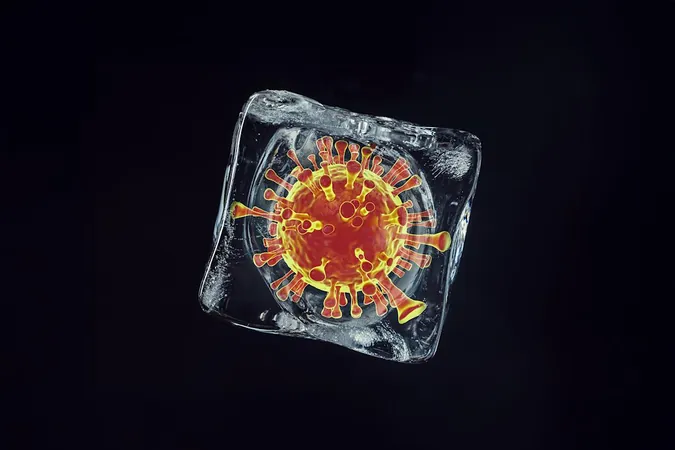
Unveiling Hidden Dangers: The Threat of Melting Ice and Ancient Pathogens
2025-04-24
Author: Yu
Melting Ice: A New Frontier for Infectious Diseases
As climate change accelerates, the melting permafrost and glaciers may reveal a chilling reality: ancient bacteria and viruses lurking in the ice. While this alarming scenario might sound straight out of a sci-fi movie, experts urge us not to panic. Instead, we must approach the situation with caution and a plan.
The Science Behind the Threat
Microbiologist Luis Andrés Yarzábal from Ecuador has been studying the microbial life hidden in glaciers since 2006. He’s noted that the ice, once thought pristine, contains a multitude of life forms—some even capable of causing diseases. As ice retreats, these pathogens could be unleashed, potentially exposing humanity to microorganisms that our immune systems have never encountered.
Pathogens on the Move
Venezuela, now devoid of all its glaciers, has seen the emergence of numerous pathogens as its ice has melted. Research shows that from 2000 to 2023, glaciers worldwide lost an astonishing 275 gigatons of mass annually—this rapid loss translates into a massive release of microorganisms into ecosystems, with projections estimating up to 10^28 microorganisms entombed in ice.
A Historical Warning Sign
One alarming event occurred in 2016, when melting permafrost in Siberia exposed reindeer carcasses long frozen since an anthrax outbreak 150 years ago. This led to a significant outbreak, infecting both reindeer and local people—an unnerving preview of what might lie ahead as more ice melts.
Zoonotic Risks in the Arctic
Further complicating the issue are researchers like Dr. Emilie Andersen-Ranberg, who highlight that many pathogens—especially zoonotic ones—have the potential to spread between humans and animals. With three-quarters of emerging infectious diseases rooted in zoonotic origins, the melting Arctic adds another layer of complexity to this public health threat.
Unpredictable Outcomes
While the actual risk posed by these ancient pathogens remains uncertain, the potential for ancient viruses to reactivate and spread is high. They could be more virulent or even resistant to modern medical interventions. The lack of familiarity with these pathogens presents a clear danger, reminiscent of historical pandemics that decimated populations when new diseases were introduced.
Call for Action and Awareness
Experts caution that understanding this risk requires more scientific investigation and robust monitoring systems. As climate change reshapes disease dynamics, proactive measures are essential. Yarzábal emphasizes the need for research into these pathogens and enhancements in public health policy to mitigate potential outbreaks.
Navigating the Future
The message is clear: the rapid changes occurring in our climate and environment are intricately linked to public health. Ignoring these threats could unleash a wave of infectious diseases, making it imperative we work towards a more informed response to the challenges ahead. The scientific community is calling for collaboration to close the gap between research and policy, particularly in areas most affected by climate change.
As we look forward, it’s critical to balance awareness with preparedness, turning fear into proactive health strategies that protect us all.

 Brasil (PT)
 Canada (EN)
 Chile (ES)
 Česko (CS)
 대한민국 (KO)
 España (ES)
 France (FR)
 Hong Kong (EN)
 Italia (IT)
 日本 (JA)
 Magyarország (HU)
 Norge (NO)
 Polska (PL)
 Schweiz (DE)
 Singapore (EN)
 Sverige (SV)
 Suomi (FI)
 Türkiye (TR)
 الإمارات العربية المتحدة (AR)