Unveiling the Hidden Life on Mars: The Quest Begins in Icy Depths!
2025-04-21
Author: Wei Ling
Mars: From a Warm Oasis to a Frosty Desert
Once a warm haven with flowing rivers and expansive oceans, Mars has become an icy, desolate landscape. Yet beneath its frozen surface, scientists are relentless in their pursuit of evidence that life may have thrived here billions of years ago—and might still exist today.
A Bold New Strategy: Seeking Life in Martian Ice
As the Curiosity and Perseverance rovers roam ancient lakebeds like Gale and Jezero craters, a new, intriguing strategy has emerged. Researchers propose that the mid-latitude regions of Mars, particularly patches of ice and snow, may harbor resilient, photosynthetic bacteria. By mirroring Earth’s 'radiatively habitable zones', scientists speculate these tiny life forms could withstand the Martian cold and radiation.
The Brains Behind the Breakthrough
Dr. Aditya Khuller, a postdoctoral researcher at NASA's Jet Propulsion Laboratory, is at the forefront of this innovative research. Joined by a team of experts from prestigious institutions, their findings were unveiled at the 56th Lunar Planetary Science Conference, marking a significant leap in astrobiology.
Survival of the Fittest: How Life Persists in Ice
On Earth, certain bacteria thrive within ice, even at extreme depths. While our planet’s ozone layer shields them from harmful UV rays, Mars presents a harsher reality: its thin atmosphere allows a staggering 30% more radiation to penetrate its surface. Despite these challenges, new models suggest that ice and snow in equatorial regions may actually melt below the surface, creating a potential refuge for life.
Numerical Modeling Paves the Way for Discovery
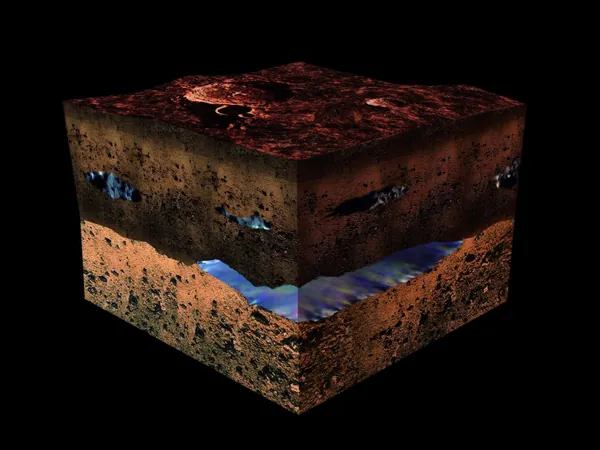
Using advanced modeling techniques, Khuller’s team simulated layers of snow, ice, and Martian dust to uncover how solar radiation penetrates these icy environments. Their findings reveal that while most solar energy is absorbed in the top meters of ice, pockets of liquid water could exist deeper, potentially creating habitable zones for microbes.
The Promise of Photosynthesis Beneath the Ice
In Earth’s frigid environments, microorganisms invoke a fascinating lifecycle—photosynthesis occurs during warmer months as ice melts, only to cease when winter returns. The research suggests that similar processes could take place on Mars. If microbial life indeed thrives within these icy patches, they could significantly aid our quest to find life beyond Earth.
A New Dawn for Martian Exploration
This groundbreaking research opens doors to future missions aimed at investigating these potential habitats. Just imagine: beneath the thick frost of Mars, life could be waiting to be discovered, sharing the planet’s long-hidden secrets with humanity. The search for Martian life is just beginning, and the icy depths may hold the key!

 Brasil (PT)
 Canada (EN)
 Chile (ES)
 Česko (CS)
 대한민국 (KO)
 España (ES)
 France (FR)
 Hong Kong (EN)
 Italia (IT)
 日本 (JA)
 Magyarország (HU)
 Norge (NO)
 Polska (PL)
 Schweiz (DE)
 Singapore (EN)
 Sverige (SV)
 Suomi (FI)
 Türkiye (TR)
 الإمارات العربية المتحدة (AR)